Are you considering visiting Mexico? Do not leave your dog behind. Here are all the things you need to know to make traveling to Mexico with a dog easy and stress free.
This is not just second-hand information but I have lived through navigating Mexican customs to travel with my dogs.
- I have traveled to and from Mexico multiple times mostly coming from Europe and the USA.
- I’ve traveled with one, two, and three dogs at a time, in-cabin only and also a combination of in-cabin and in-cargo.
- I have needed a certificate of exportation and not.
- I have skipped the line in customs due to a special program, and have missed one requirement once and had to fix it while at the airport!
Can you take a dog to Mexico?
Yes! Mexico has specific requirements for entering and leaving the country, but they are easy to comply with. It may seem daunting in the beginning, but once you know exactly what you need, it is very easy!
Travel Requirements: Know Before You Travel
First, only dogs and cats are considered pets in Mexico for customs purposes. Make sure your dog complies with the requirements, especially the internal and external deworming. Here are the requirements for traveling to Mexico with a dog:
Going to Mexico with a Dog from USA or Canada
Your dog does not need a health certificate or vaccination card but will be subjected to a physical inspection upon arrival.
While this is the official policy, last time I traveled from the USA to Mexico—January 2025 and March 2024— I was asked for a health certificate that included rabies vaccine information and needed an importation permit to go through customs.
Airlines will sometimes ask for a health certificate before flying. Always carry one just in case.
Going to Mexico from other countries
You will need a Certificate of Good Health that is not older than 15 days in order to enter Mexico with your dog. The health certificate needs to have the following information:
- Veterinary information either from an official government entity, or if private, in letterhead with professional license number printed or photocopy of the professional license number (or equivalent).
- Name and address of exporter (in country of origin)
- Name and address of importer with destination address in Mexico
- Pet details (name, race, color, date of birth, and microchip if they have one)
- Rabies vaccine information (date of application and validity; puppies under 3 months are exempted)
- Statement that the pet was clinically healthy during the inspection
- Internal and external deworming within the previous 6 months and are free of ectoparasites (fleas, lice, ticks, etc.)
Check the SENASICA website for up-to-date information.
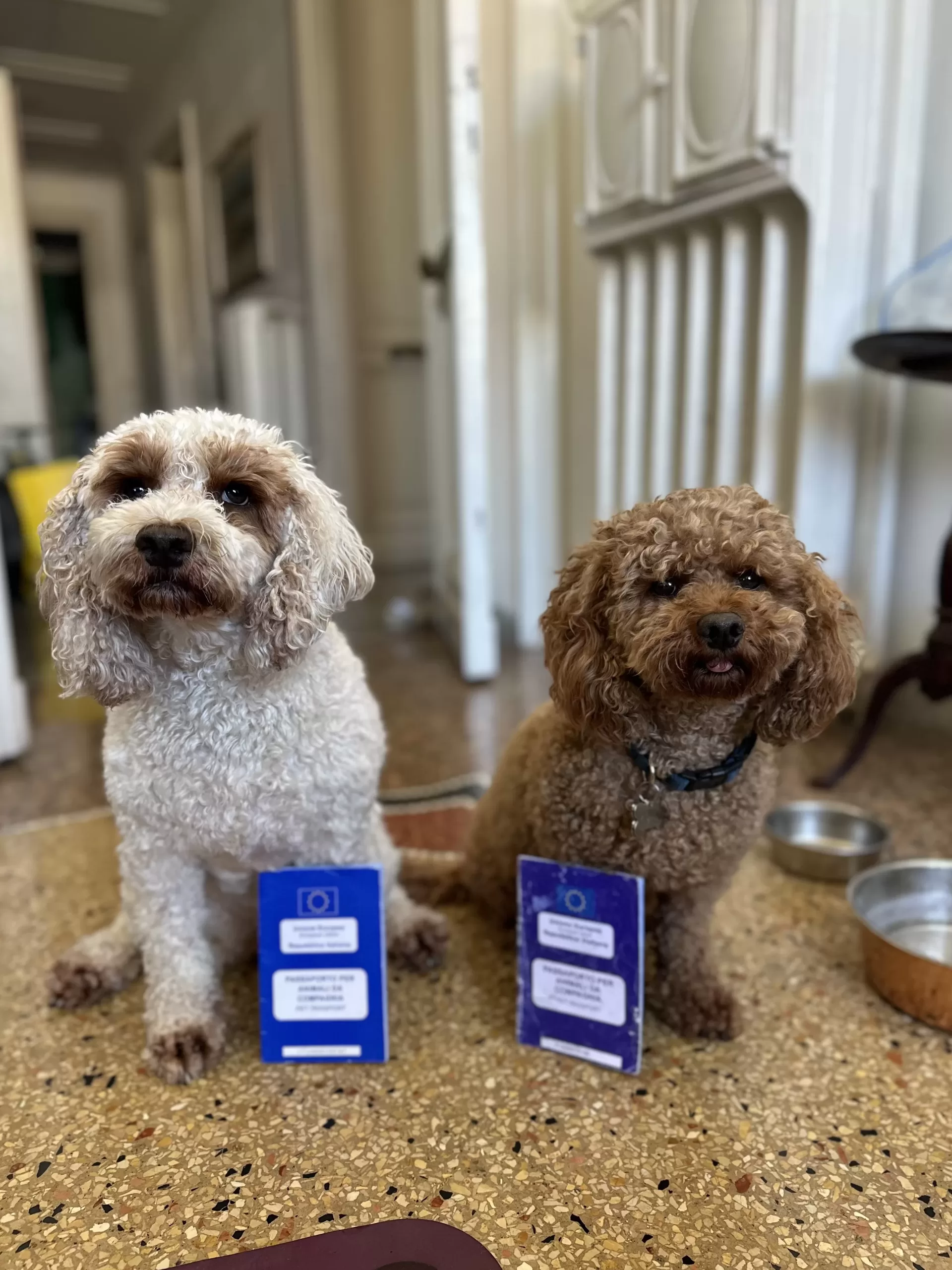
If you are interested in traveling with your dog, check out my hard earned tips of traveling with dogs, where I also include some training tips to prepare your dog for traveling!
What You can and cannot bring to Mexico
When traveling with your dog, you might want to bring their comfort items like their dog bed or their usual food, but here are the things you CANNOT bring into Mexico:
- Bedding
- Implements
- Accessories
- Toys
- Treats or prizes made with ingredients of ruminant origin
If you do bring these objects and they are found, they will get destroyed.
You dog may enter Mexico with:
- Collar and leash
- Carrier or container that will be sprayed with preventative treatment upon inspection.
- Food that is in a sealed package with a label in a legible language and with a sanitary authority seal from a country that has animal health requirements in the MCRZI. This PDF sheet has exact quantities and allowed countries for each type of product.
- Medicines with a prescription
Pets Undergoing Medical Treatment
If your dog has any skin wounds or infections, is ill, has a medical condition, had recent surgery, or cannot be vaccinated against rabies, you need to present a medical prescription and a professional certificate on official letterhead that explains the condition and treatments.
This is crucial so your dog doesn’t get quarantined or rejected and so you can bring their required meds.
What Happens Upon Arrival to Mexico With a Pet
Certificate of Importation
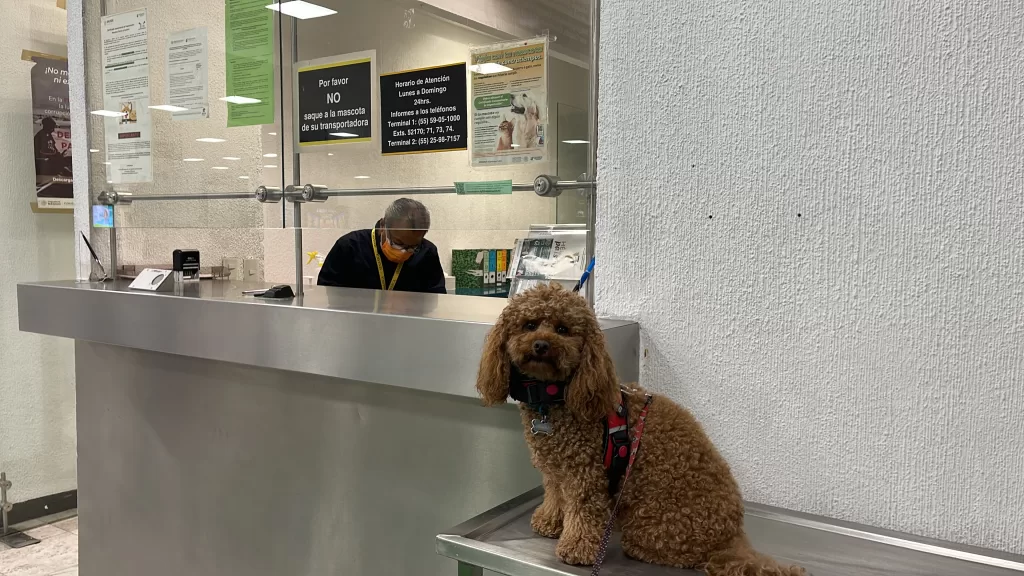
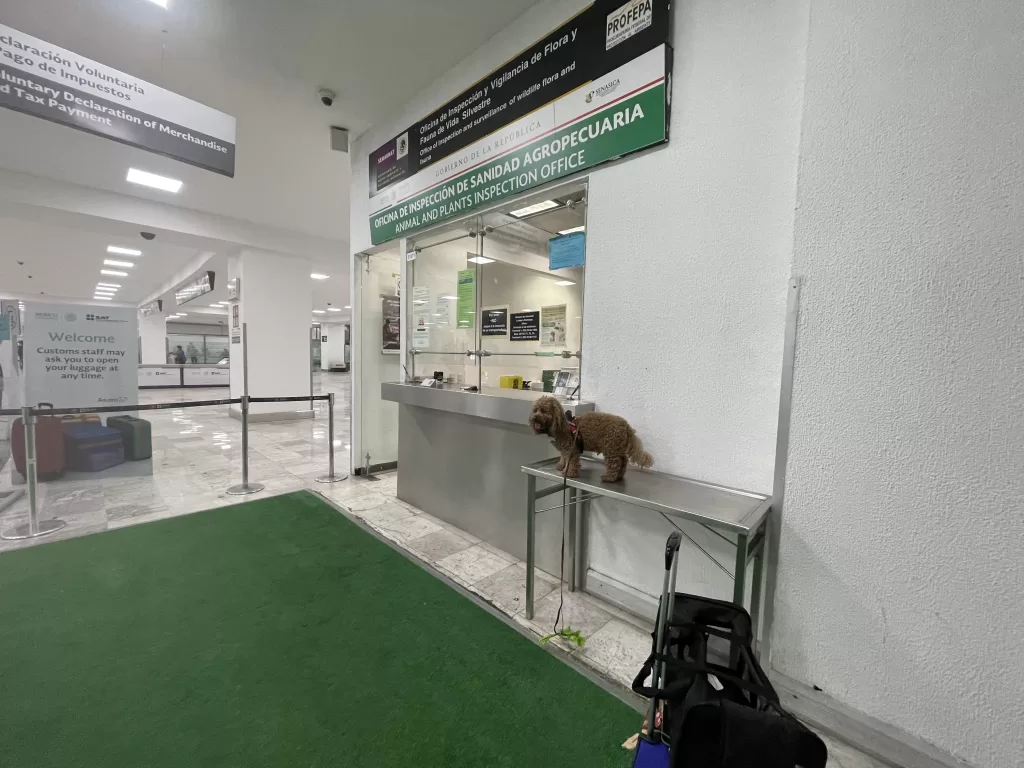
Once you go through immigration, you need to find SENASICA to obtain a certificate of importation as you cannot leave customs without it.
This certificate of importation has no cost for dogs or cats!
Physical Inspection
Your dog and their carrier will be inspected upon arrival. They will ask you to hold your dog’s face so they can safely pat them down. It is a very simple pat down, non-invasive. They will check their ears and teeth but only superficially.
They say the carrier will be inspected and sprayed down with a preventative treatment. Anything bedding or toys will be thrown away. I have never gotten any of my dogs’ carriers inspected or sprayed with anything but I have seen other people’s carriers being inspected and sprayed. Maybe it depends on the size and where you are coming from.
If anything is found during the inspection, such as an ectoparasite (fleas), there are options depending on what is found. Such as calling a local veterinary to come to the airport for treatment. If a tick is found it has to be sent to a lab for testing and your dog will be kept by the Animal and Plant Health Inspection Offices (OISA, by its Spanish acronym) until testing comes back.
What If I Am Missing a Requirement to Travel to Mexico With a Dog
Do not fret! There are options if you are ever missing one of the requirements.
You can call a local veterinary to come to the airport. They will be allowed inside the airport to treat your dog. While the SENASICA workers are not allowed to give you any recommendations for a particular vet, I did ask once which one was known to arrive faster than the others.
The first time I took Mishka to Mexico, I was missing the external deworming, aka the pipette your dog gets to prevent fleas and ticks. If your dog gets this in the form of a vaccine or any other preventative measure, you need it documented in the paperwork. If like me, it flew over your head that that little thing was called “external deworming”, well you’ll have to call a vet from the Mexican Yellow Pages or a fast Google search.
Mascota Viajero Frequente
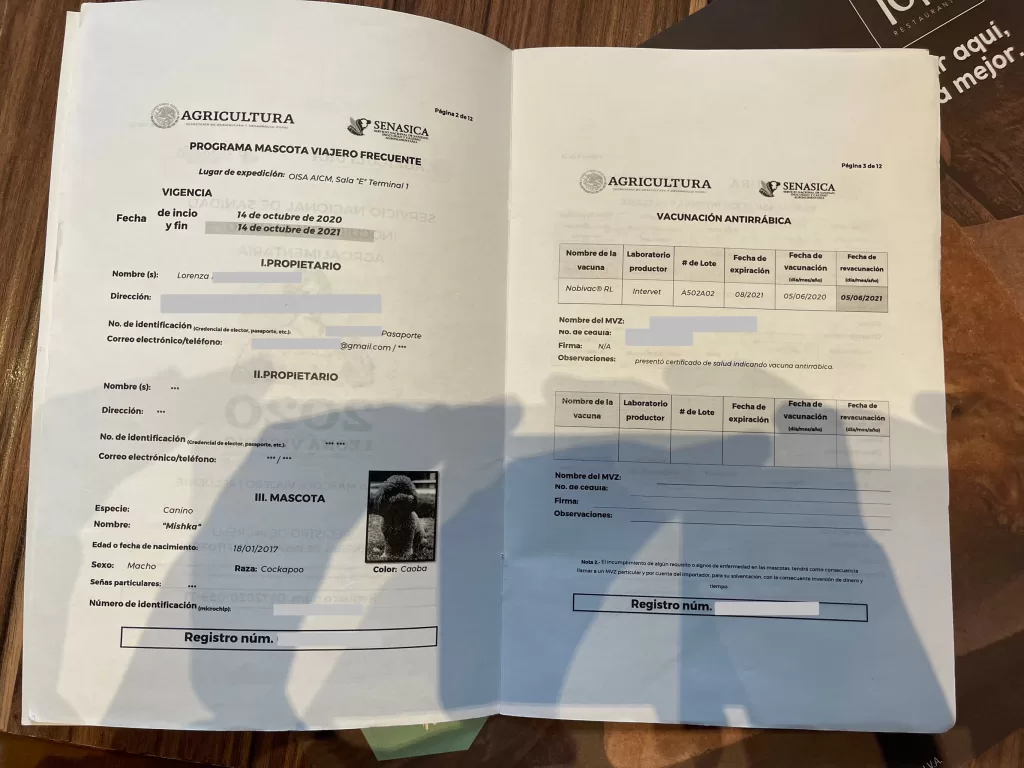
SENASICA has an amazing program for traveling with a pet to Mexico called Programa Mascota Viajero Frecuente (PMVF, Frequent Traveler Pet Program) and it allows for an expedited entrance of your pet into Mexico without the need for a health certificate every time.
Since Mexico’s certificate is only valid for 15 days, it is a pain and costly to get one when every time you need it when you travel a lot. With this program, you only need to renew the health certificate only every 6 months.
The program is valid for a year and you skip ahead in line of people that don’t have it. This causes some anger, but it takes way less time for them to process a pet on the program.
Mishka and I have used this program since 2019 and I highly recommend it. You just send the information via email, and take your dog to be inspected and pick-up the PMVF at the Animal and Plant Health Inspection Offices (OISA) you chose. It is easy and works very well!
Leaving Mexico with a dog
To exit Mexico, you need to get a certificate of exportation through SENASICA called a Certificado Zoosanitario de Exportación.
This certificate is valid for 8 days and you can get it at any of their authorized offices. I always get it at the airport as their offices are open at every international airport when there are flights.
There are a few steps:
Step 1: Get Exportation Certificate
Present the form, official ID, health certificate not older than 5 days, vaccination history/card, microchip if required by the country, ectoparasite treatment if required by the country, and lab tests as required by the country.
They say the certificate will be delivered within 3 working days but I have always gotten it either the day before travel or the day of travel. When getting it, you do not need to bring your dog, but before departure you do need to get your dog inspected and get a stamp on your exportation certificate.
One time I even panicked as I hadn’t gotten one right before my flight to Rome but the SENASICA personnel were able to provide one before check-in.
But beware, if their system is down, it will take you about an hour or more, if it is up and running it can take as little as 20 minutes. Plan accordingly.
Step 2: Present Your Dog at the OISA/SENASICA Office
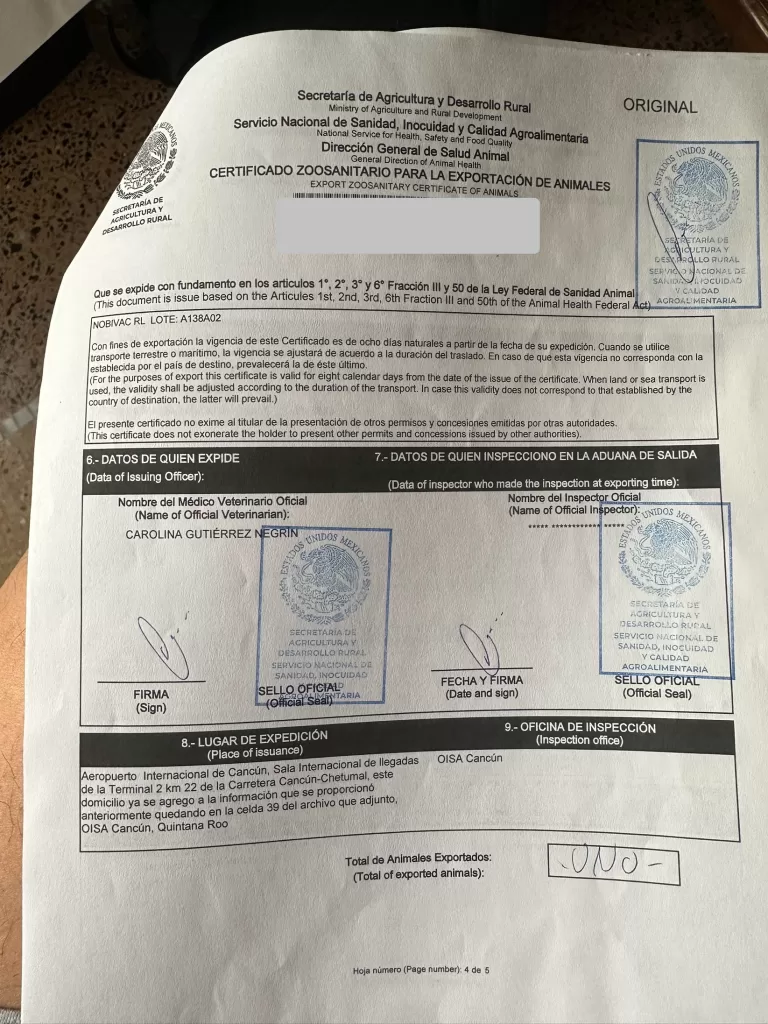
Before checking in, you will need to present your dog for inspection and get a second stamp on your certificate.
If traveling to a country that is not USA or Canada, you will not be able to check-in without the certificate or the second stamp.
If you are doing a layover in USA or Canada but traveling somewhere else, you will not be asked for an exportation certificate.
If you are traveling to Europe and do not have a European Pet Passport, then you will need to turn in a letter that states you do not intend to sell your dog and provide proof of microchip.
Returning to US from Mexico with Pets
You do NOT need the exportation certificate if going to the US or Canada.
The United States requires a CDC Dog Import Form when coming from a rabies-free or low-risk country—Mexico counts. It is free and lasts for 6 months.
The airline will ask for the CDC Dog Import Form and proof of rabies vaccination administered at least 28 days before travel. If needed, you can use the vet health certificate you originally traveled with.
Dogs need to be at least 6 months old to comply with CDC requirements.
What to Expect During US Customs with a Dog
Once you arrive in the US, declare a live animal during immigration. You will have to wait for an escort who will take you to the customs declaration area.
You will hand your passport to the Customs and Border Protection officer a the customs area. If you have checked bags, you will be escorted to pick them up while leaving the cabin bags in the waiting area.
Then, they will send you to the X-ray machines and an officer will ask you if you have food. You will also need to show the CDC confirmation email— I printed it just in case— and the rabies vaccination proof.
After having your bags X-rayed, you are free to go!
Learn more Dog Travel Tips:
How To Travel With Your Dog: The Essential 5 Tips For Dog Air Travel
Best Dog Travel Gear That I Personally Use and Why You Should, Too
Find Other Pet Friendly Destinations
Travel To Europe With A Dog: Complete Guide For Easy Dog Vacations
Croatia With Dogs: All You Need To Know To Travel With Your Dogs
Plitvice Lakes With Dogs: A Guide To Exploring Croatia’s Natural Wonder
Traveling Italy with Your Dog: Everything You Need to Know for a Fun and Easy Italy Trip
Dog Friendly Rome: Pet Friendly Hotels and 8 Fun Pet-Friendly Activities in Rome