Christmas in Mexico City is one of the most magical times of the year. Not only does the capital of Mexico come alive with sparkling lights, festive markets, and centuries-old traditions but it is also a great time for eating, drinking, and being a part of a Mexican Christmas tradition, like Mexican posadas.
How to Say Merry Christmas in Mexico?
Most Mexicans speak Spanish so Merry Christmas in Spanish is feliz Navidad.
You can also say felices fiestas for happy holidays, and próspero año nuevo for happy new year in Spanish.
Merry Christmas in Yucatec Maya is “Ki’imak Navidad” combining a native word with a Spanish one since indigenous people didn’t have a concept for Christmas before the Spaniards. Yucatec Maya is spoken in the Yucatán Peninsula, so if you’re going to Cancun, Tulum or Cozumel, you can learn how to say it.
Learn more Mexican slang for your next trip to Mexico!
When Does Christmas Start in Mexico City?
In Mexico, Christmas time is called las Fiestas Navideñas and we call this time of year the Guadalupe-Reyes Marathon! Why you ask?
Well, celebrations for Christmas in Mexico City officially start with the Feast of Our Lady of Guadalupe on December 12th and end on Día de los Reyes Magos (Three Kings’ Day) on January 6th. Hence the name of maratón Guadalupe-Reyes as it is 26 days of nonstop celebrations, family, and eating.
Mexico is an overwhelmingly Catholic nation with 78% identifying as such in the 2020 census. The next largest religious group is protestant/evangelical followed by atheists. So you can expect most people to participate in the celebrations and traditions, even if not in a religious capacity, they will at least do it as it is part of Mexican culture.
I think it is my second favorite holiday, after Día de Muertos, obviously. Celebrating Christmas in Mexico City is an unforgettable experience full of traditions and great Mexican food!
Christmas in Mexico Weather
The weather in Mexico City during Christmas is cold but not too cold. Expect cold mornings with lows of 6°C (42°F) but days that can get as warm as 24°C (75°F). Bring a jacket and warm layers so you can bundle up when needed, and take off layers if the day gets warm.
Important Dates During Christmas in Mexico
Before telling you the most important dates in Mexico, an important thing to know is that Mexicans celebrate Christmas on December 24 not really on Christmas Day!
These are the important dates for Christmas in Mexico City:
December 12- Feast of Our Lady of Guadalupe
December 24- Nochebuena (Christmas Eve)
December 25- Navidad (Christmas Day)
December 28- Día de los Santos Inocentes (Mexican April fool’s)
January 6- Día de los Reyes Magos (Epiphany)
February 2- Candelaria (not technically Christmas but related to it)
Feast of Our Lady of Guadalupe
La Virgencita Morena— brown virgin— is incredibly important to Mexicans. Millions will make the pilgrimage to the Basilica of Guadalupe in Mexico City for December 12th every year. She is thought to have appeared to a native Mexican, Juan Diego, in 1531 and her image has been used as a symbol of the Mexican people with Miguel Hidalgo using it during Mexico’s Independence.
This day kicks off Mexico’s Fiestas Navideñas and there might be a ton of traffic this day.
Posadas

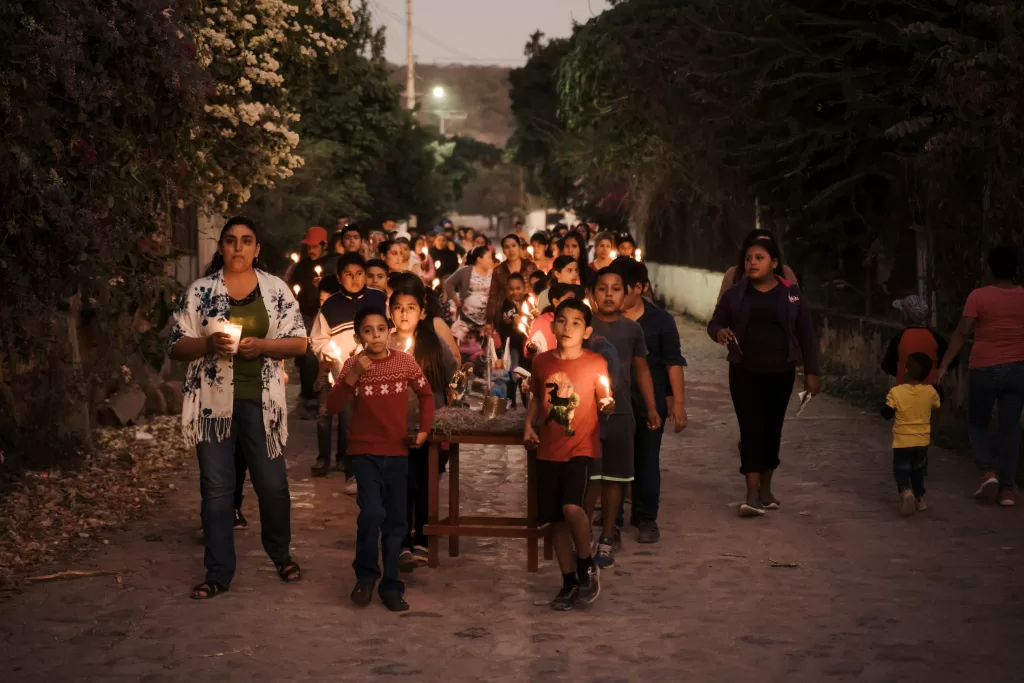
Posadas are a great Mexican Christmas tradition. These celebrations are based on the Nativity story where people gather and someone dresses as Mary and Joseph and ask for posada, lodging. This is why they are called posadas, representing how they were searching for a place to stay before Jesus was born.
In traditional posadas, the group can go house to house or just leave the house where they are in and sing villancicos, Mexican Christmas carols, asking for lodging. You carry candles and beg for accommodation.
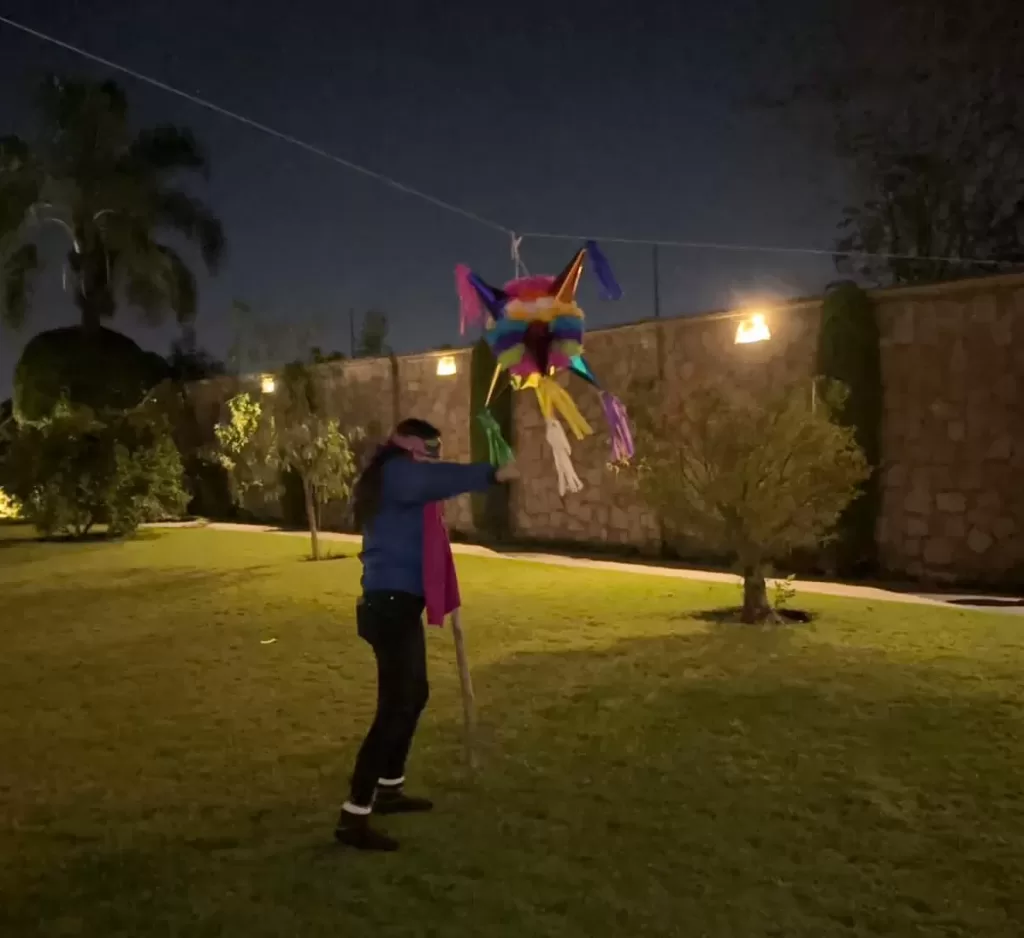
There are also piñatas during posadas, the round with colorful spikes one. These were traditionally made from clay and had only 7 spikes representing the 7 deadly sins: pride, greed, wrath, envy, lust, gluttony, and sloth. You normally hit the piñata with a stick with your eyes covered as a sign of blind faith. While clay piñatas have been a Mexican tradition since before the Spanish, Christmas piñatas were definitely a Spanish imposition.
Posadas and piñatas were a way for the Catholic church to convert indigenous Mexicans to catholicism. The piñatas also had traditional fruits, like cane sugar sticks, mandarins, and other seasonal fruits that represented God’s goodness when you overcame sin. My mom still remembers breaking her head open from the pottery piñata breaking on top of her!
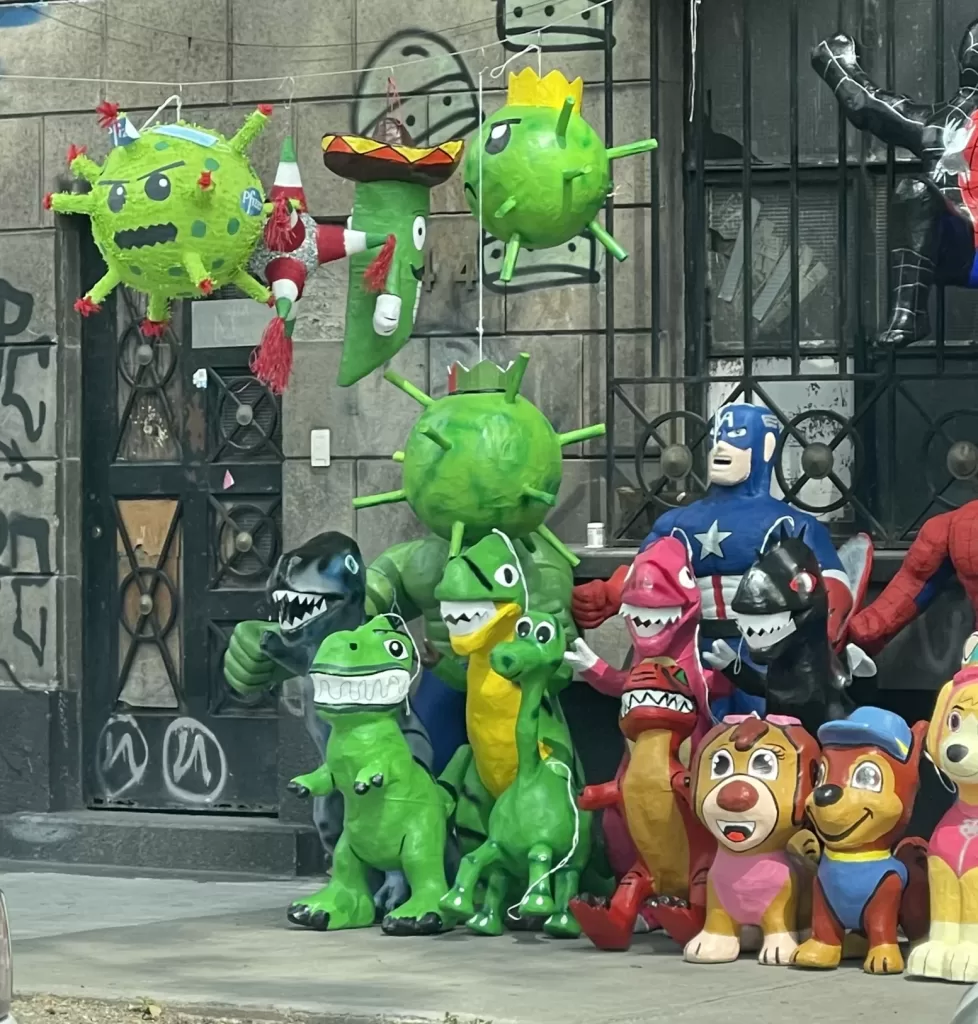
Today, piñatas are made from cardboard and will have candy and other prizes. They will have anywhere from 3 to more than 7 spikes and have become a part of Mexican party culture, more than an association with beating sin. There are so many types of piñatas for all occasions, and during Covid they even made virus piñatas!
Likewise, posadas, don’t necessarily have to be Catholic, though some are organized by local churches. A lot of companies will hold their office Christmas party between December 16-23, and many friend groups will also throw their own. They have also become part of modern non-religious Mexican culture.
Nochebuena
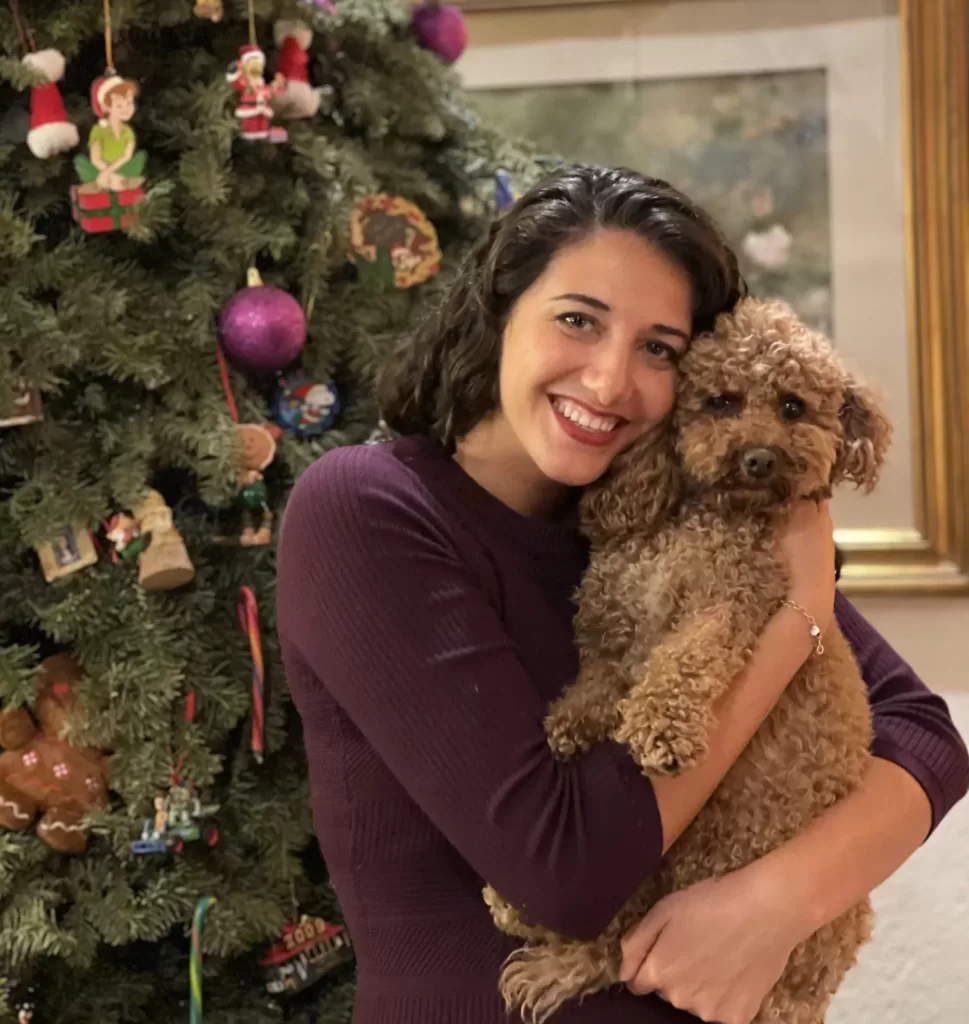
Like I mentioned earlier, Mexican’s Christmas dinner is on Christmas Eve. My US husband finds it funny that we have our bigger celebration the night before Christmas Day. It is very convenient when dating someone from a different culture as we can celebrate with both of our families without choosing one over the other.
Mexican families gather for Christmas dinner on Nochebuena, or the good night, and then go to midnight mass together. Even families that don’t go to mass, like mine, still celebrate on Christmas Eve and we exchange gifts that night. It does make it easier for us to get reservations when we travel, like when we were in Rome for Christmas.
So if you’re doing a Christmas in Mexico vacation, take into account that Christmas Eve is the big Christmas celebration night in Mexico.
Día de los Santos Inocentes
This is the Mexican version of April fool’s day! You will hear Mexicans say “Feliz Dìa de los Inocentes” on this day dropping the “Santos.” The Día de los Inocentes is a Spanish tradition brought to Mexico during colonial times.
While it has become a fun tradition with many people tricking others, its origin is sad and solemn.
This day commemorates the Feast of the Holy Innocents on December 28 based on the biblical story in which King Herod had all babies younger than two killed. I really don’t know how it became from a day of remembering the innocent lives lost in this biblical story to a jokester holiday.
Talking to my husband about it, I realized that the day to play tricks on people might be this one due to a play on words. Inocente in Spanish is not only innocent, but can also mean someone who is gullible and naive, and therefore easily tricked. That may have devolved a holiday to commemorate the killing of children to one of tricking people.
You can expect many people trying to trick others and even major news agencies putting out funny and fake stories. Do not believe anything any Mexican tells you on this day!
Año Nuevo
Like other parts of the world, Mexico celebrates New Year’s Eve on December 31st. Families normally cook the same Christmas dishes and eat a dozen grapes at midnight!
Eating the 12 grapes at midnight is something my family has to always do, regardless of where we are. You are supposed to eat one grape per every clock strike and make a wish— 12 for every month of the New Year.
If you haven’t tried eating 12 grapes at the same time, you will find it more difficult than you think! It is incredibly funny to see everyone stuffing their faces with grapes.
Día de los Reyes Magos
Christmas in Mexico City officially ends on Día de Reyes. Día de los Reyes commemorates when the three wise men visited Jesus after he was born and brought him gifts. In Mexico, the three wise men are called los Reyes Magos— magic kings or Magi.
Most Mexican children will not get gifts from Santa, but from the Reyes. You have to leave a shoe out on January 5 close to the Nativity scene or Christmas tree so the Three Kings know who to leave presents for.
After finding what the Reyes brought, we eat the rosca de Reyes. This is a round pastry covered with dried fruit. Every one, including children, has to cut their own piece and whoever finds the muñeco has to make or buy tamales for the Candelaria.
Don’t let anyone else cut your piece and if you uncover the muñeco, even if they’re not on your piece, it is yours to keep.
Oh, and the muñeco was supposed to represent baby Jesus, but today most roscas have multiple little white dolls hidden inside. There are even some that now have themed plastic dolls with different popular characters.
Candelaria
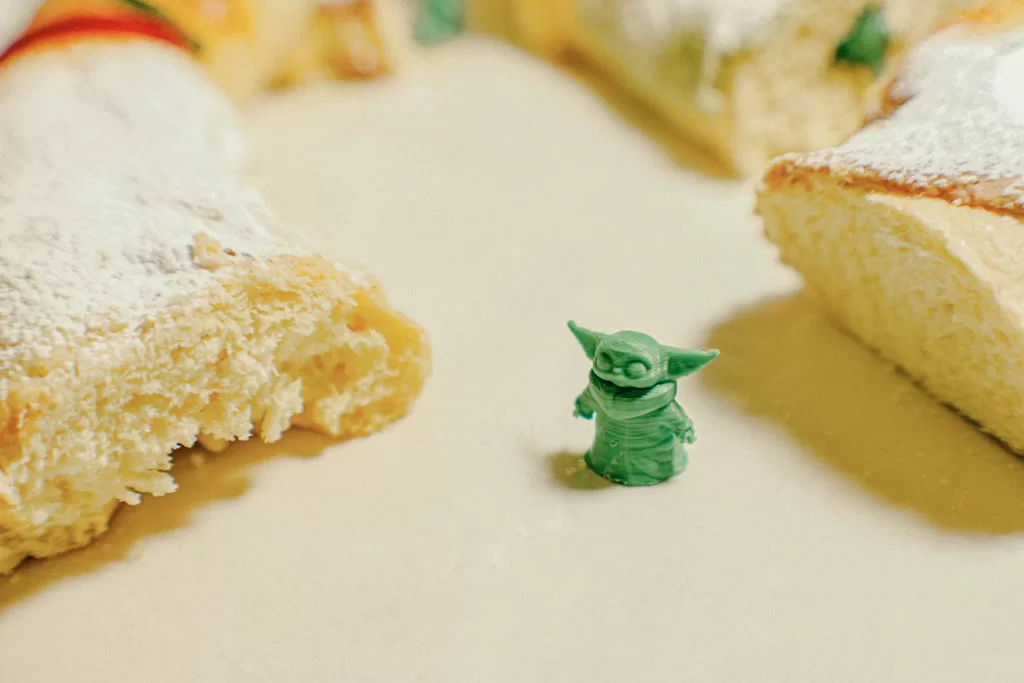
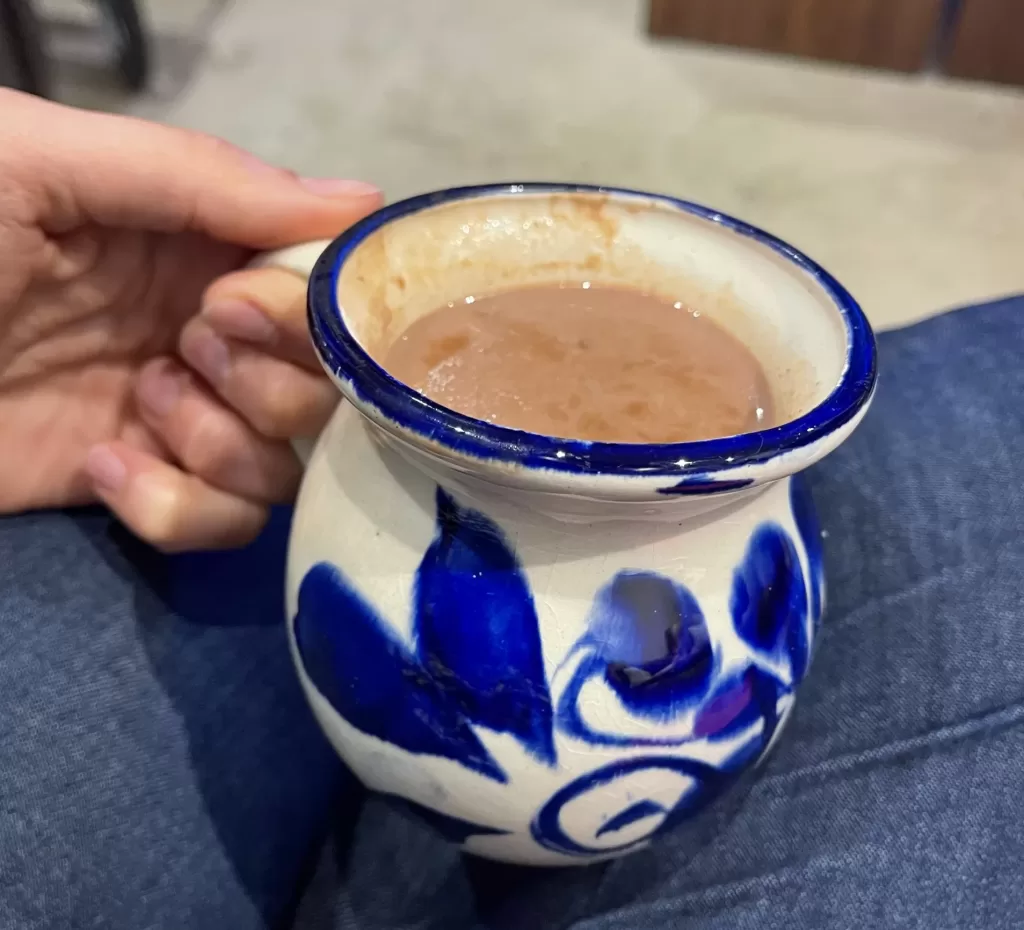
Candelaria is known as Candlemas in English, it is not technically part of Mexican Christmas, but it is connected to Día de Reyes. People gather to get free tamales from those who found the plastic baby and drink delicious atole or champurrado. I love when my grandma makes champurrado, atole (a corn drink) with chocolate and cinnamon.
Many people dress up their statues of baby Jesus from their nativity scenes and take them to church to get blessed in commemoration of Jesus’ presentation at the temple.
Best Christmas Experiences in Mexico City
These are some ideas to experience the best Christmas traditions in Mexico while you are visiting Mexico City for the holidays.
1. Verbena Navideña: Christmas Market and Celebrations at the Zócalo

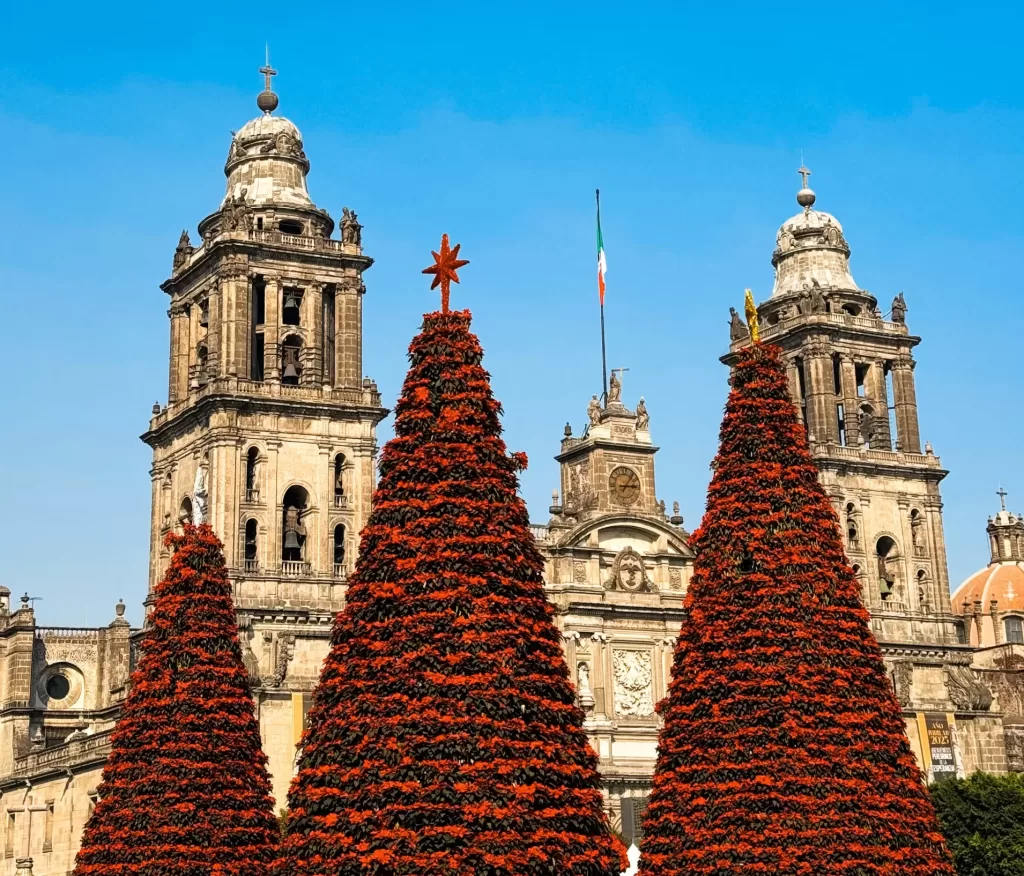
The city’s main plaza in the Historic Center, the Zócalo, transforms into a Christmas wonderland. It is a monthlong free event with huge decorations, pastorelas, concerts, and the biggest Christmas market in Mexico.
What to see during Christmas in Mexico City’s Zócalo in Centro Histórico:
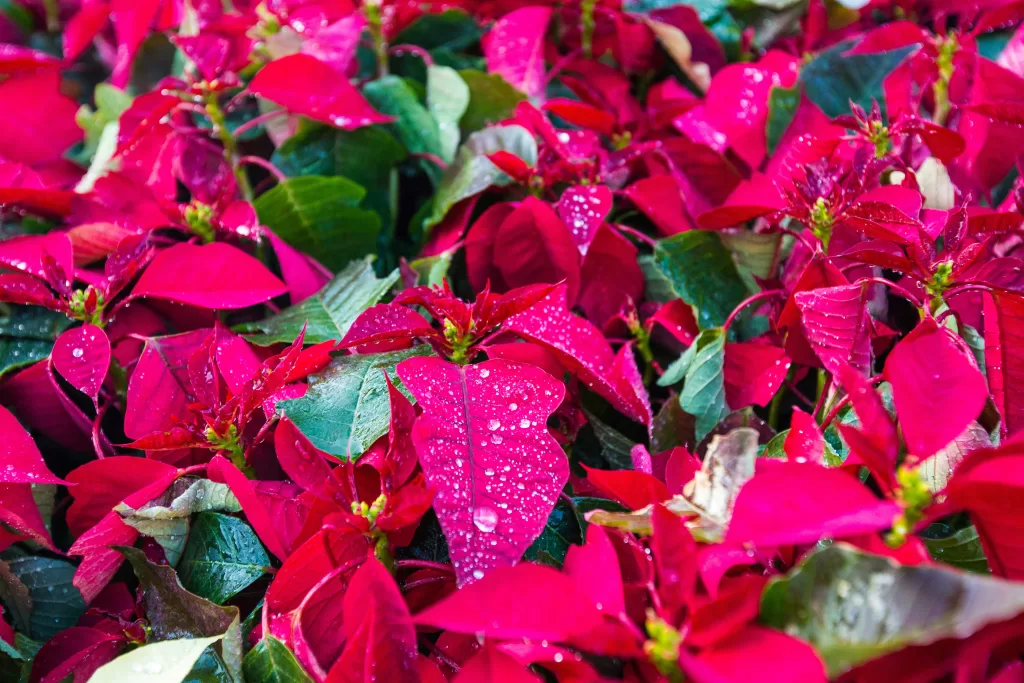
- Giant decorations: Christmas trees, piñatas and a nativity scene. Last year there were 200 piñatas hanging over the Zócalo, thousands of nochebuenas (poinsettas).
- Artificial snow: this was a hit last year as Mexico City does not get real snow!
- Christmas market with traditional crafts and street food stalls where you can get traditional Christmas themed Mexican souvenirs and amazing Mexican food like buñuelos, tamales, ponche, and champurrado.
- Cultural Events: free concerts, pastorelas, and other holiday activities
2. Visit the Basilica of Guadalupe on December 12th
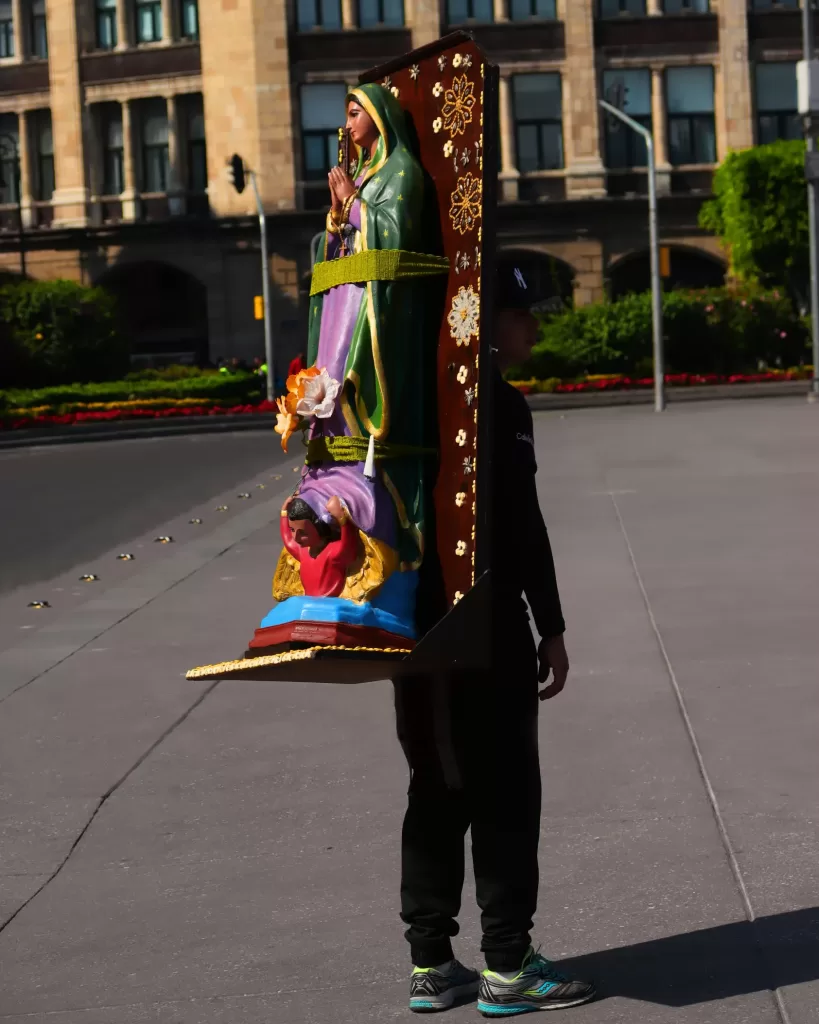
Visiting during the Feast of Our Lady of Guadalupe is a once in a lifetime experience. Pilgrims arrive from across Mexico, many walking for days to reach the basilica for the morenitas day in Mexico City. The atmosphere is deeply spiritual, filled with music, dance, and devotion.
There are some more devoted pilgrims who have “walked” the whole way on their knees as a sign of sacrifice and offering to God. The Basilica also dresses up for Christmas with a nativity scene and Christmas tree.
3. Listen to Villancicos

You can listen Mexican Christmas carols, or villancicos, for free at the concerts offered at Mexico City’s Zócalo. Or you can get tickets to some amazing concerts like the Orquesta Filarmónica de la Ciudad de México at Centro Cultural Ollin Yoliztli or other Christmas concerts at the Auditorio Nacional and the Ex Convento de Regina.
If you’ve never listened to Spanish Christmas songs, you are in for a treat. Some of them are ridiculous, like Mi Burrito Sabanero— a Venezuelan song— or Los Peces en el Río. These have awesome lyrics like “look how the fish in the river drink, look how they drink for having seeing Jesus being born.”
Here is a taste of what songs you can listen to while visiting Mexico City for Christmas!
4. See the Nativity Scenes
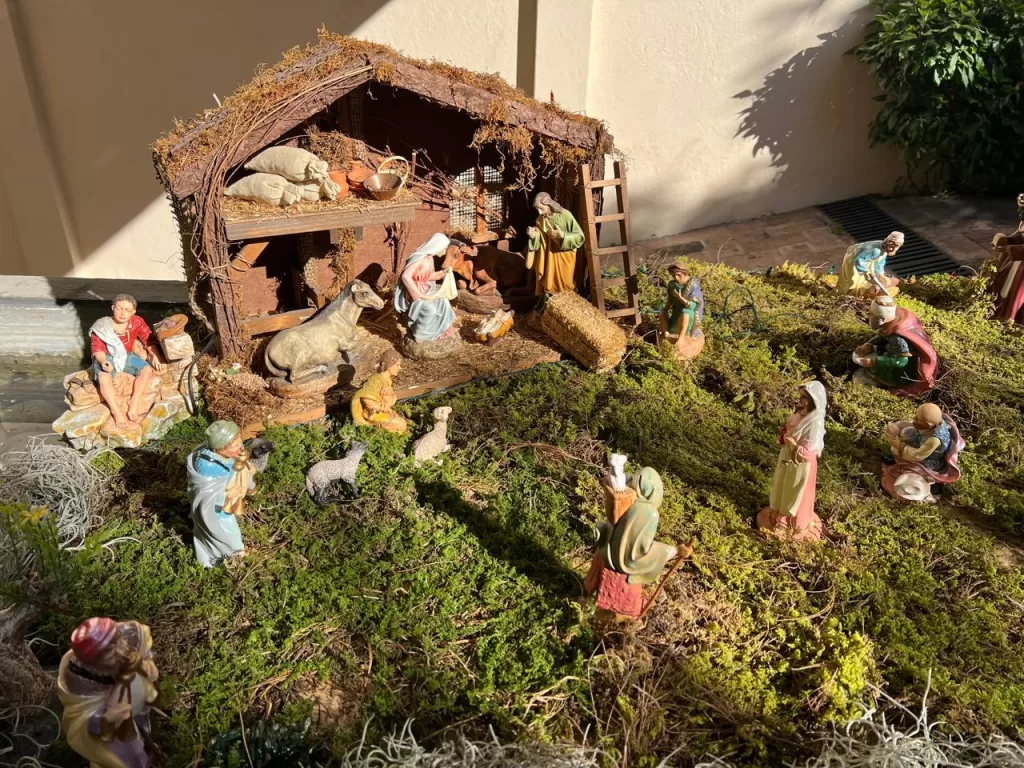
Nacimientos, or nativity scenes, are very popular during Christmas in Mexico. They consist of the traditional elements of the biblical story and baby Jesus is not placed in the manger until December 25.
Mexico City will have nativity scenes all over the city that combine traditional folk art with Catholic elements. You can see nativity scenes in Mexico City at:
- The Zócalo often features elaborate and colossal nacimientos (nativity scenes)
- Centro de Coyoacán
- Cerro de Tepeyac
- Palacio de Iturbide
5. Watch the Christmas Themed Ballet Folklórico de México

The Ballet Folklórico de México by Amalia Hernández presents the Navidades en México where she explores the fiestas navideñas through Mexican folk dance. The three acts follow the annunciation and birth of Jesus, the visit from the Reyes Magos, and finally a representation of a typical posada.
Navidades en México takes place in the open area in front of the Museo Nacional de Historia in the Castillo de Chapultepec and would be fun way to celebrate Christmas in Mexico City.
6. Take Part in a Posada or Watch a Pastorela (December 16- 24)
If you’re visiting Mexico City between December 16 and December 24, head to neighborhoods like Coyoacán, San Ángel, or Tlalpan, where community posadas are lively and many might be welcoming to outsiders. Try not to crash a family posada, but you can ask around in local churches for one they organize you might be able to join. Posadas are definitely one of the best Christmas traditions Mexico has to offer.
Pastorelas are plays that dramatize the journey of shepherds to Bethlehem to witness Jesus’ birth. They are normally humorous and incorporate dances and can incorporate political and social situations. The more creative the pastorela, the better. When I was in school, we always had a pastolera and I was even Mary once!
There are many places in Mexico City where you can see a pastorela, including for free in town squares such as the Zócalo or getting tickets in places like the Torre Latinoamericana.
7. See Mexico City Light Up with Lights and Poinsettas
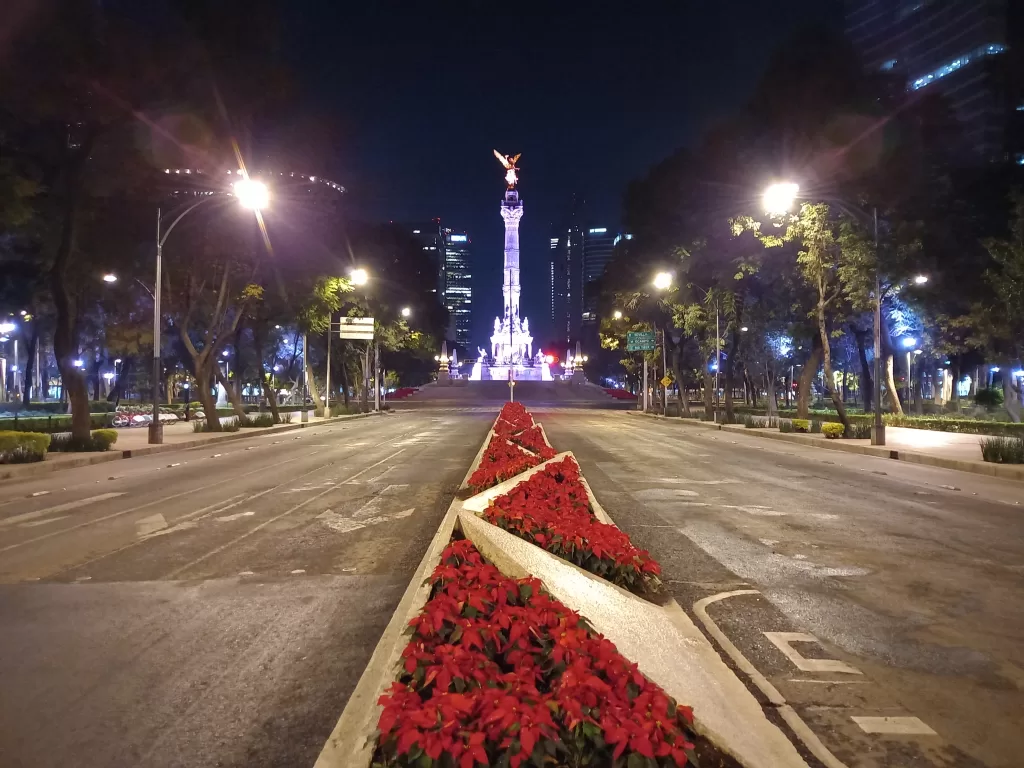
Streets and plazas, especially along Avenida Reforma, glow with lights and nochebuenas, or poinsettias. These red flowers are called nochebuenas in Mexico and are very widely used to decorate during Christmas. See the nochebuenas decorate the Paseo de la Reforma and if you’re in Mexico City in early December, visit the Mercado de las Nochebuenas also on Reforma.
Walk around Polanco, Coyoacán, or Centro Histórico to see the Christmas lights and decorations. Many Mexico City museums will also be decorated and have special Christmas activities.
8. Go Skating in a Free Ice Rink in Mexico City
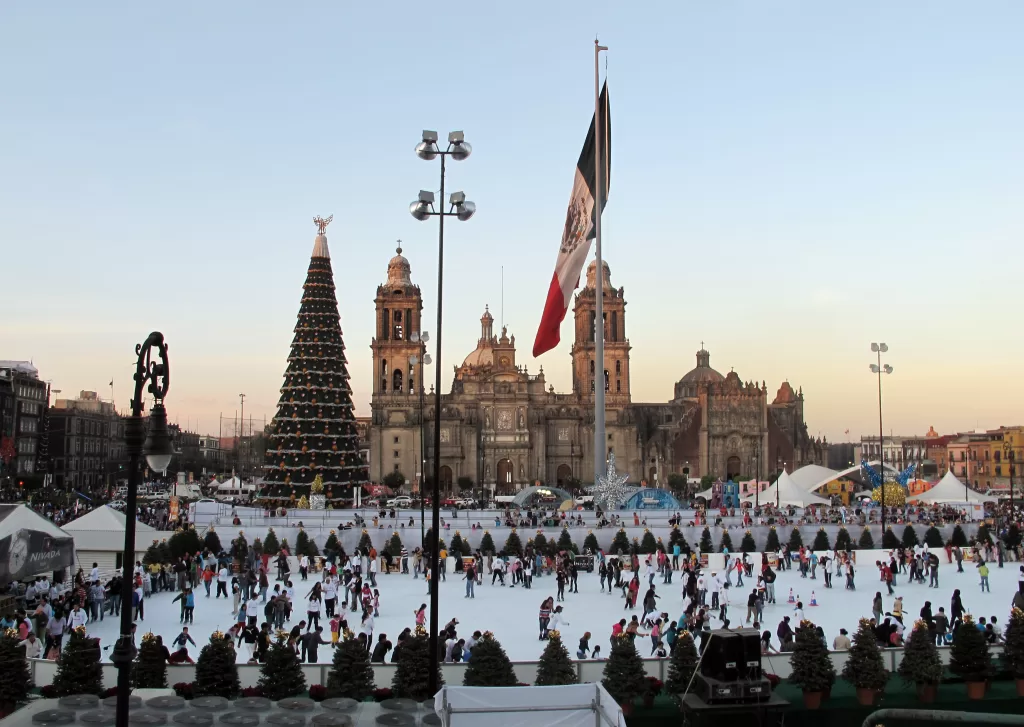
Christmas in Mexico City is an incredible celebration as the city goes all out for its citizens! For many years, the Zócalo had one of the only free ice rinks in the city, but in recent years Mexico City has tried to decentralize the Christmas festivities. Last year there were 16 ice rinks in different parks, sport centers or plazas.
Go ice skating in one of the many ice rinks around Mexico City that will also offer concerts, pastorelas, and other activities for the whole family.
9. Eat Some Amazing Mexican Christmas Foods in Mexico City
Local markets like Mercado de Coyoacán, Mercado Sonora, or the Zocalo Christmas Market are great places to try authentic holiday food. A trip to Mexico City during the holidays isn’t complete without tasting these typical Mexican Christmas dishes:
- Tamales – steamed corn dough generally with savory fillings and sometimes with sweet. Tamales are eaten throughout the year, but they are even more popular during this time.
- Pavo Navideño- Mexican Christmas turkey is delicious! My mom always prepared this for Thanksgiving as it is way better. The turkey is marinated with adobo, a sauce made with chipotle and chile de ancho. The best thing about the turkey is the tortas de pavo, or turkey sandwiches with bolillo bread, the next morning.
- Buñuelos – these look like a crispy fried tortilla prepared with wheat flour, fried, sprinkled with sugar, and then bathed in a piloncillo syrup. My grandma always spoils me with some homemade buñuelos and one of my favoirte traditions on Christmas. They are different from the Spanish buñuelos, that are balls filled with flavoring.
- Bacalao – dried salted cod that gets soaked for days and sautéed with tomatoes, onion, olives, and potatoes. The dried salted cod will be everywhere in local markets during this time as people buy it to prepare it for Christmas parties.
- Romeritos – are made from an edible herb called quelite. They are peither boiled or steamed sometimes served in mole poblano or flavored with dried shrimp.
- Pozole- this is a delicious broth, also eaten throughout the year but especially popular during the colder months. It is made with hominy, pork, and chilies and can be red, green or white. Pozole is normally served with radishes, lettuce or cabbage, avocado, cilantro, onions, and lime.
- Ponche Navideño – warm fruit punch with fruits like tejocotes, apple, and guavas, cinnamon, sugarcane sticks or piloncillo.
- Champurrado– champurrado is a type of atole— a typical Mexican drink made with corn flour, piloncillo, cinnamon and vanilla. Champurrado has chocolate added, which makes it even more delicious. If you’ve never tried it, you need to try champurrado or at least Mexican hot chocolate. There is a typical Mexican saying that uses atole: “dar atole con el dedo.” This means to give someone the minimum in order to fool them or deceive with false promises.
- Rompope- rompope is another great Mexican Christmas drink. It is similar to eggnog, made from milk, sugar, cloves, cinnamon, nutmeg, eggs, vanilla, and rum.
Check out more Mexican food to try on your trip to Mexico City!
Mexicans traditions center on community and celebrating family, like Day of the Dead, and Christmas is no different. Christmas in Mexico City is more than just decorations and lights — it’s a season of community, tradition, and joy. Whether you’re sipping ponche in a neighborhood posada, admiring the Zócalo’s Christmas lights, or sharing a slice of Rosca de Reyes, by spending your Christmas vacation in Mexico you’ll experience the warmth and spirit of Mexican hospitality.
You will definitely feel at home and be welcomed into celebrating Christmas in unique ways making Mexico City one of the best places in the world to celebrate Christmas.
Check Out More Mexico City Guides
Mexico City Travel Guide: Best Neighborhoods, What to Do, Where to Eat, written by a local
33 Mexican Slang Words
Where To Shop The Best Mexican Souvenirs In Mexico City
10 Best Day Trips from Mexico City
Off The Beaten Path Mexico City: 22 Non-Touristy Things To Do
5 Fun And Unique Activities In Mexico City
Best Museums In Mexico City You Can’t Miss
Mexico City-Festivals And Traditions
Día De Muertos In Mexico City: An Amazing Celebration Of Life, Death, And Tradition
10 Day Mexico City Itinerary For Day Of The Dead