Mexico City is a vibrant cultural hub with a rich history, and its museums are some of the best in the world. From ancient Aztec artifacts to modern art, the city’s museums showcase the country’s diverse heritage. Here are the best museums in Mexico City you need to visit.
Do not skip out on the Museo de Arte Popular as it is my favorite museum!
General Information on Mexico City Museums
- Most, if not all, museums in Mexico City are closed on Mondays. All of the ones on this list are.
- All the prices are in Mexican pesos, the Mexico’s national currency. The exchange rate is about 20 pesos per $1 USD or 21 pesos per €1. Rates might change but this is a good starting point.
- Most museums are free on Sundays for Mexican citizens and residents and some might be free for everyone as well. If you want a free museum visit, go on a Sunday but I recommend avoiding Sundays at they might be very full.
- Some museums offer free tours like Museum of Anthropology and Bellas Artes. Ask in the information desk.
- Some museums don’t offer online ticketing, but if one does, take advantage of it and avoid the line.
- Check out my tips for individual museums as some have fun little extras like the Voladores de Papantla or a good place to buy souvenirs from your Mexico City trip.
1. Museo Nacional de Antropología (National Museum of Anthropology)
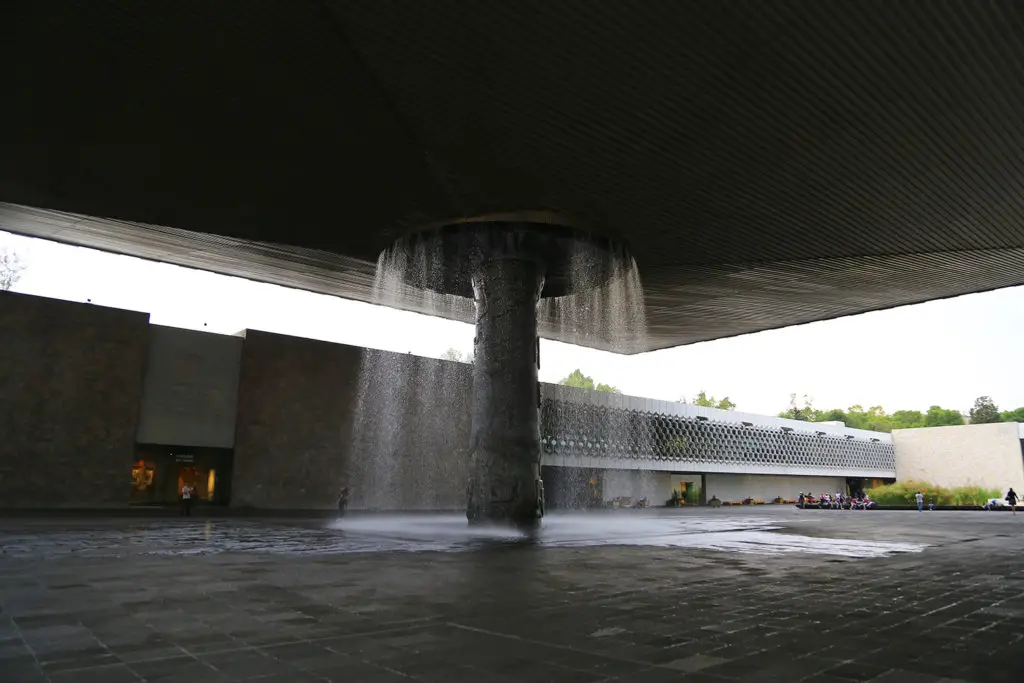
It is the most visited museum in Mexico City for multiple reasons: it contains the largest collection of ancient Mexican art, the Sun Stone or Aztec Calendar, and the museum itself is a grandiose art exhibit in itself. The courtyard is definitely impressive with its inner waterfall.
The best place to start is in Introduccion a la Antropologia, and go counterclockwise from there. If you don’t have much time, go straight to Teotihuacan and move counterclockwise from there to to Toltecs on. Some of the highlights are one of the four basalt warrior columns from Tula’s Temple of Tlahuizcalpantecuhtli, a jade mask of the Zapotec Bat god or the 20 tonne Olmec head carvings in Oaxaca room, the recreation of Pakal’s tomb in the Maya room, the Sun Stone in the Mexica (Aztec) exhibit, and the amazing umbrella roof in the courtyard.
The upper level contains ethnographic exhibits on present-day indigenous groups in Mexico. It is very interesting to see how these cultures continued developing and are still present today, preserving their traditions, mixed a bit with catholicism and Spanish culture, and language.
My recommendation is to see this museum before doing a day trip to Teotihuacan, so you can get more of an idea on Mexican culture and history.
Take advantage of the free one-hour guided tours (four daily, except on Sunday from 10:30am to 5pm) in English or venture forth yourself- there are many explanations translated into English, so don’t fear not understanding.
Opening times: Tuesday-Sunday from 9am to 7pm
Cost: $100 mxn
Free on Sundays for Mexican citizens and residents.
How to get there: Walk about 1.3km from either the metro Auditoria (Line 7) and metro Chaputlepec (Line 1)
📍Av. Paseo de la Reforma y Calzada Gandhi s/n, Col. Chapultepec Polanco.
More information
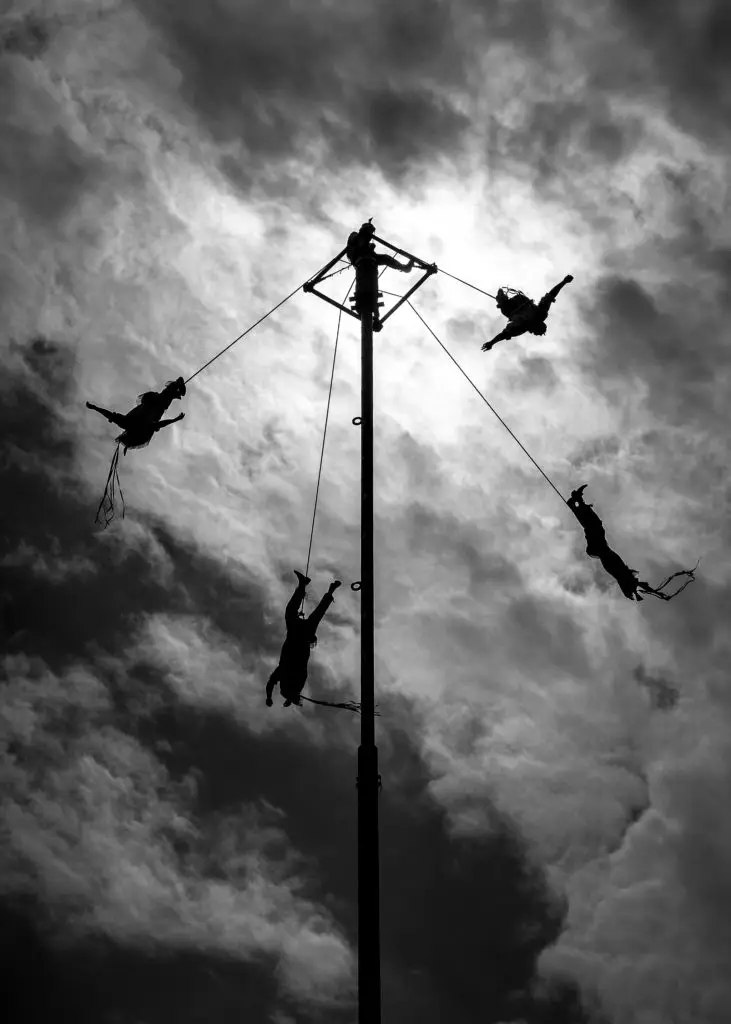
Tip: Check out the clearing in front of the museum where there is a tall post, right in the middle. Here the voladores de Papantla “fly” from a post in a dance dating back to before the conquest. Five voladores go up a 20 meter pole, four of them fall backwards spinning around the pole until they reach the bottom, 13 rotations each for a total of 52 (the Mexica century), while the fifth volador stays on top of the pole singing, beating a drum or playing a flute. I remember watching them when I was little and gasping as they fall backwards, trusting gravity and the rope that ties them. Don’t miss this incredible Mexican traditional dance on days the Museum is open, from Tuesdays-Sundays from 11am-6pm with shows every 30 minutes for tips.
2. Museo Frida Kahlo (Frida Kahlo Museum)
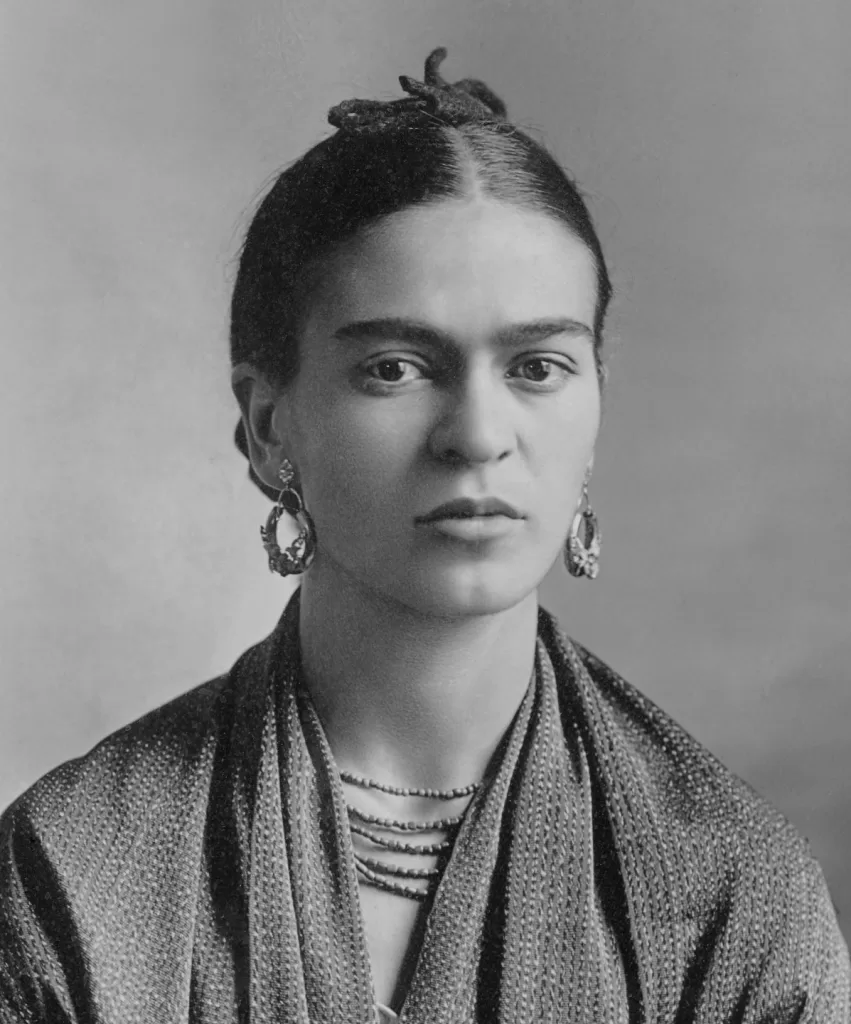
La Casa Azul, Frida’s family home in Coyoacán, shows the intense connection between her, her universe, and her work. The Blue House is where Frida was born and where she died, even though when she was married to Diego Rivera she lived in multiple places.
It, is of course, one of the most popular museums in Mexico City of one of the most popular artists in Mexican history.
You can explore her personal belongings, collected art, the rooms where she lived and famous works by Frida Kahlo like Viva la Vida (1954) or Frida’s first self portrait, Frida y la Cesárea (1931) or Frida and the cesarean, and Retrato de mi padre Wilhem Kahlo (1952) or portrait of her father.
The house is full of of mementos and personal belongings that recount her long and complicated relationship with Diego Rivero and the leftist intellectual circle they entertained. Leon Trotsky even lived with the couple for a while during his exile in Mexico, until Trotsky and his wife were kicked out over a disagreement.
You can also see an exhibition on Frida’s style through her dresses and spine-straightening corsets. The intersection of her disability and image is clearly portrayed through her art and her home.
Opening times: Tuesday and Thursday-Sunday open 10am to 6pm. Wednesday open from 11am to 6pm.
Cost: $320 mxn
Mexicans get a discount.
How to get there: About a 1.5km walk from metro Coyoacán
📍Calle de Londres 247, Del Carmen, Coyoacán
More information
Tip: Book tickets online as the Friday Kahlo Museum might sell out. Coyoacán Market nearby is a great place to get Mexican food.
3. Museo de Arte Popular (Museum of Popular Art)
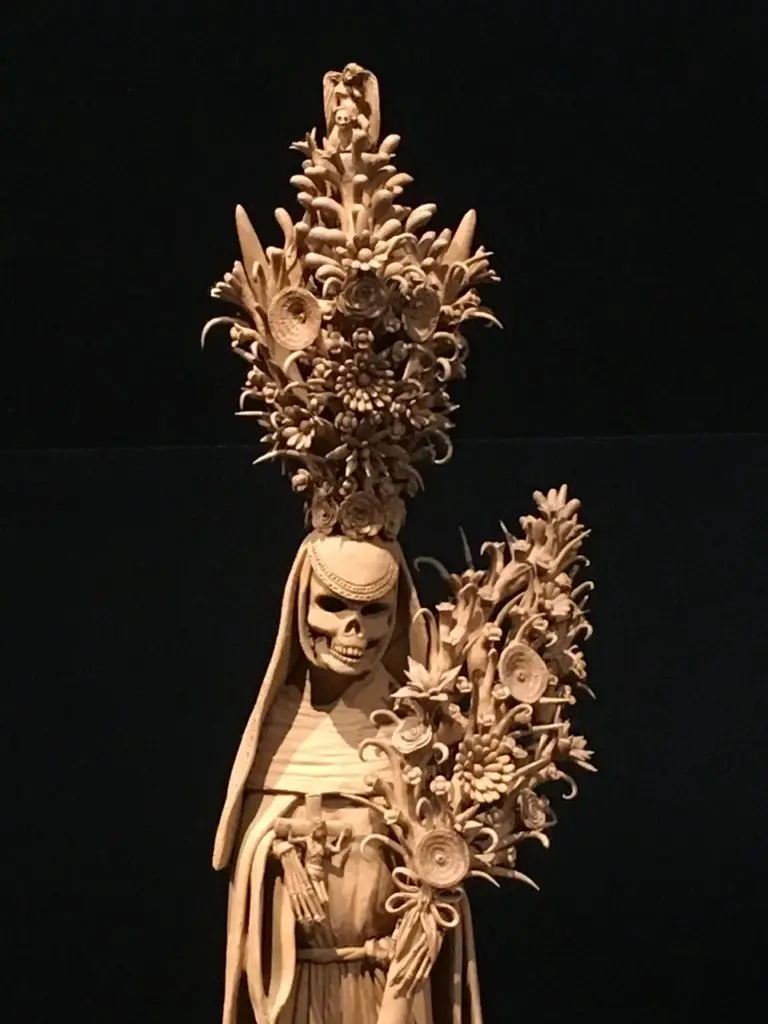
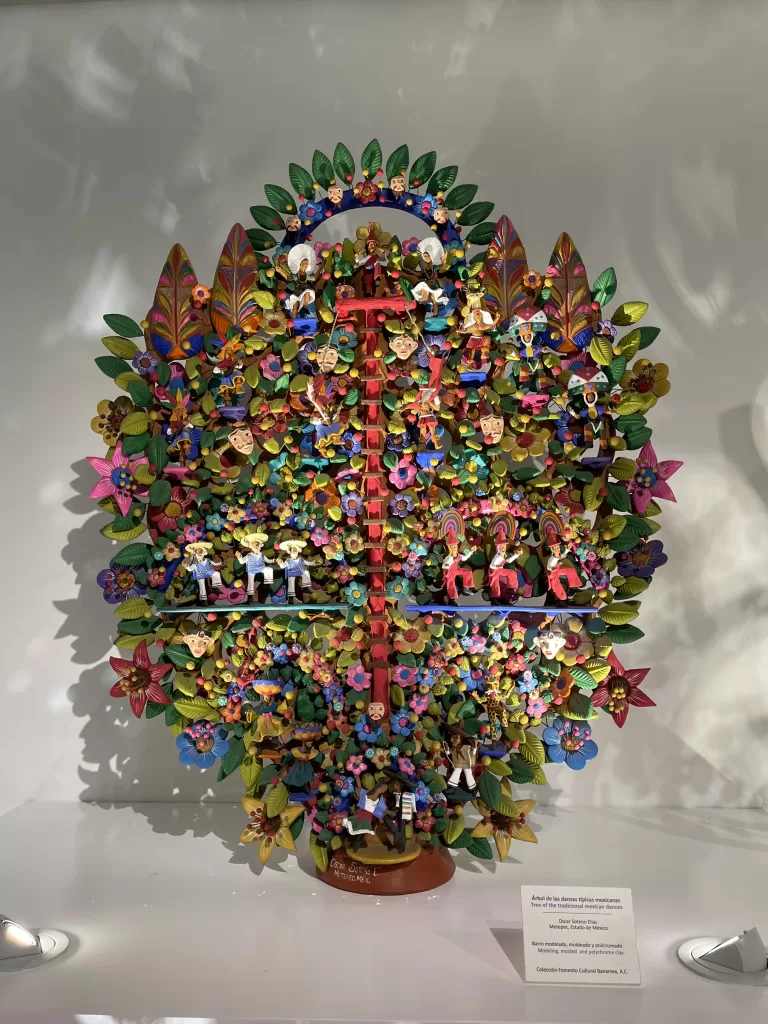
This is one of my favorite museums in Mexico city. It’s a less visited museum and I understand why as there are so many amazing museums, sites, and fun activities to do in Mexico City.
The MAP promotes Mexican handcrafts and folk art with multiple levels of exhibits of textiles, pottery, piñatas, alebrijes, masks, and more. Mexican folk art mixes Catholicism with indigenous traditions in colorful works like the tree of life that was originally used to depict the Biblical story of creation during colonial times but with indigenous pottery techniques. The artwork has evolved into including more diverse elements.
The MAP organizes workshops and contests for different handicrafts, including the one for the monumental alebrijes for Día de Muertos.
Sometimes they hold workshops focused on children making it a great activity in Mexico City with kids. Don’t miss out on one of the best museums in Mexico City!
Opening times: The MAP is open Tuesday through Sundays from 10am to 6pm.
Cost: $60 mxn bought on site
Sunday entrance is free.
📍Revillagigedo 11, Col. Centro
More information
Tip: The Museo de Arte Popular gift shop is an amazing place to buy authentic Mexican souvenirs.
4. Templo Mayor Museum
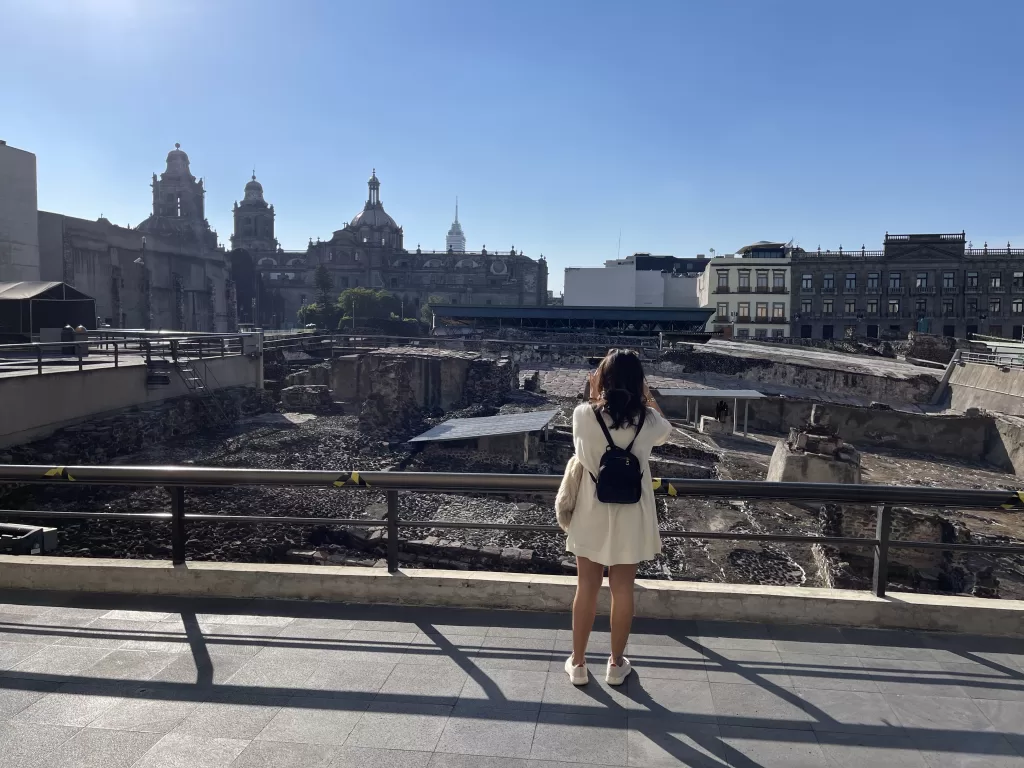
The Templo Mayor or Great Temple was the main sacred site of the Mexica people, also known as the Aztecs. We think they built this temple in the exact site where the Aztecs saw the eagle perched on the cactus eating the snake— Mexico’s symbol. This symbol is also on our flag!
The Templo Mayor was hidden for centuries because the Spaniards built the Cathedral on top as a sign of dominance and conquest. But in 1978, electricity workers found the 8-tonne stone-disc carving of the Aztec goddess Coyolxauhqui, and excavations for the site began.
It is an incredible archeological site to visit and see what the pyramids of Mexico were like. There are multiple scale models of the city, as well as artifacts that are great to see and imagine the life of the Mexica before the Spanish.
You can see some of the Templo Mayor without paying entrance to the museum from the east of the Cathedral. I do recommend paying for the ticket to enter the site and museum.
If you don’t enter you will miss the Wall of Skulls, where stone skulls represent the hundreds of human sacrifices performed by the Mexica (sometimes erroneously referred to as Aztecs). These are not real skulls—although there are walls with real skulls— but it is still very impressive! One skull wall is estimated to have been nearly 200 feet long and 100 feet wide at its peak.
Opening times: The Templo Mayor Museum is open Tuesday to Sunday from 9am to 5pm
Cost: $100 mxn
Sundays the Templo Mayor Museum is free for Mexican citizens and residents.
How to get here: Take Line 2 of the metro to the Zocalo stop.
📍Seminario 8, Centro Histórico
More information
Tip: You can hire a certified guide if you don’t know Spanish as most of the explanations were in Spanish.
5. Palacio de Bellas Artes
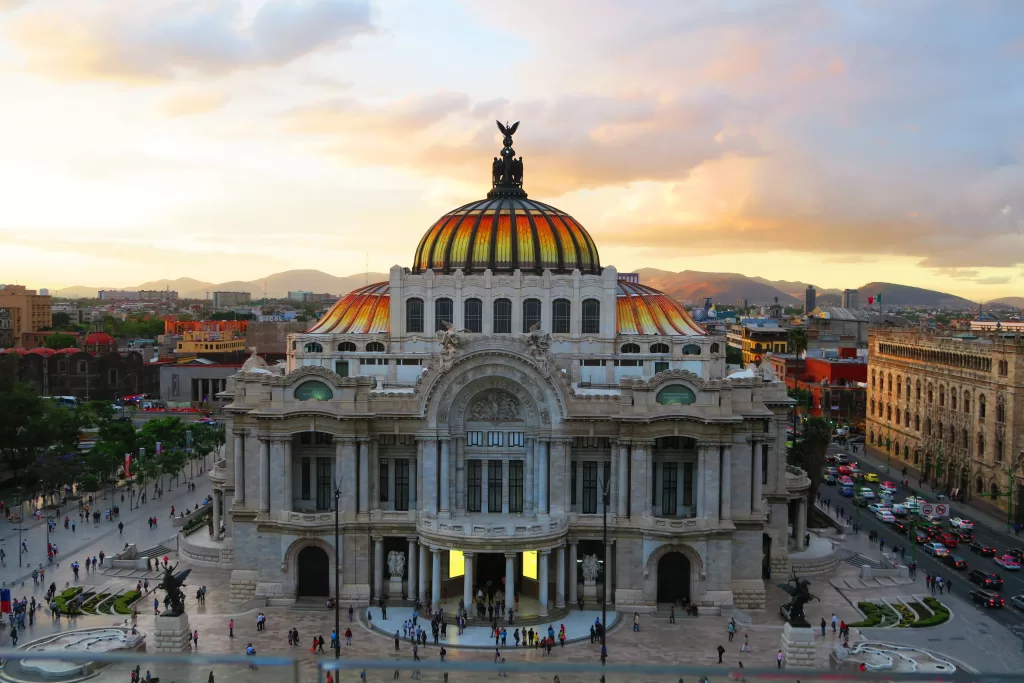
The Palace of Fine Arts is one of Mexico City’s most iconic buildings. Italian architect Adamo Boari started the project on commission from Porfirio Diaz. During the Mexican Revolution, the project was halted and later finished in the 1930s by Federico Mariscal. The time jump and different architects is the reason why the inside is art deco while the outside is art nouveau.
The museum inside the palace is also one of Mexico City’s best museums as it has murals from some of Mexico’s most famous muralists: Rufino Tamayo, David Alfaro Siqueiros, José Clemente Orozco, and Diego Rivera.
Here you can see the reproduced mural that Diego Rivera had done for the Rockefeller Center that got destroyed due to it being too socialist.
It is also a working concert hall where you can watch the Ballet Folklórico and seasonal opera and symphony performances. If you do go inside the hall see the beautiful ceilings and impressive stained-glass curtain designed by Dr Atl and assembled by Tiffany & Co.
Opening times: The Museum of Palacio de Bellas Artes is open Tuesday-Sunday from 10am to 6pm.
Cost: $95 mxn bought on site
Sunday free entry for everyone.
How to get here: Take Line 2 of metro Bellas Artes or Line 8 metro Garibaldi-Constitución de 1917.
Trolebus Line 1 to metro Santa Veracruz if going south or Madero going north
Metrobus Line 4 metro Bellas Artes.
And can also get here on the Turibus, Mexico City’s hop-on-hop-off bus.
📍Av. Juárez s/n esq. Eje Central Lázaro Cárdenas, Col. Centro
More information
Tip: See the Ballet Folklórico. It was a fun activity that showcased Mexican traditional dances and folk art. While it was mostly tourists in attendance, I had a great time and you get to see the inside of the concert hall!
6. Museo Nacional de Historia (National History Museum)
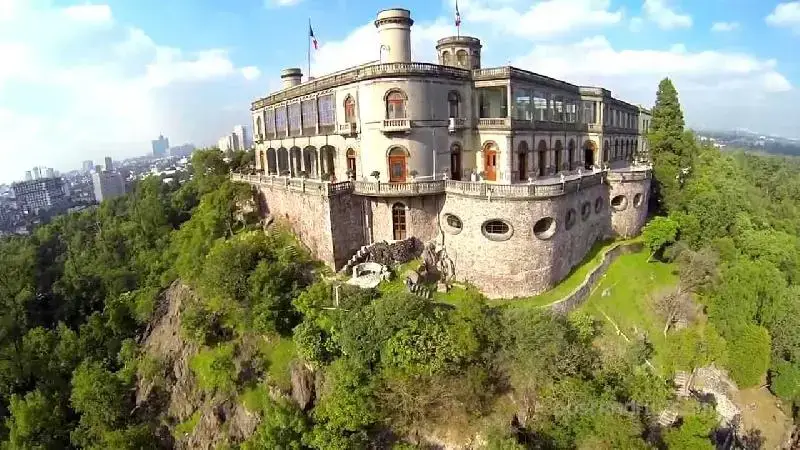
Chapultepec Castle was the only real castle in America. It was begun in 1785 intended for the Spanish viceroys but finished only after independence when it became the national military academy.
It later became the home of Mexican Emperor Maximiliano of Habsburg and Empress Carlota in 1864. In 1940 it became the Presidential House until 1940 and today it is home to the Museo Nacional de Historia.
The Castillo de Chapultepec is part of Mexican history with so many important historical events taking place here like the occupation of the United States during the Mexico-US War (1846-1848). During this occupation, the famous Niños Héroes, child heroes, defended the military academy from the occupying US troops and one covered himself in the flag and threw himself off the roof.
Opening times: The National History Museum is open Tuesday to Sunday from 9am to 5pm.
Cost: $100 mxn
Sundays free entry for Mexican citizens and residents.
How to get here: The castle is inside the Bosque de Chapultepec. Follow the road that curves up behind Monumento a los Niños Héroes or take the train that runs up every 15 minutes when the castle is open for $25 mxn.
More information
Tip: While you can see the castle from outside, to see some incredible views of Mexico City, pay the entrance to the castle.
7. Museo Tamayo (Tamayo Museum)
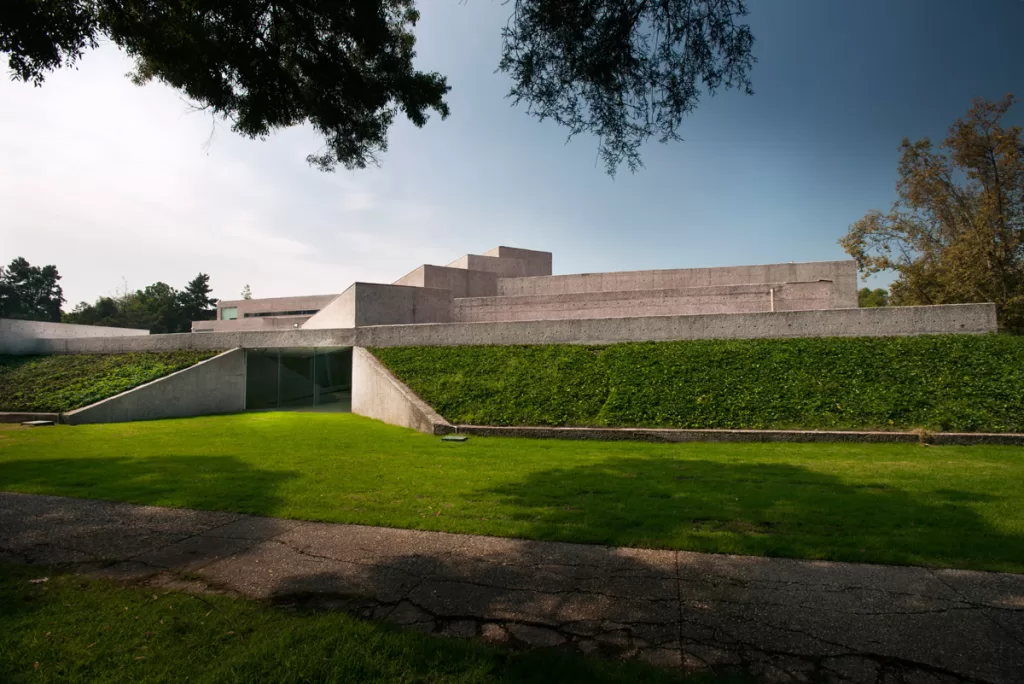
This museum houses the international contemporary art donated by Rufino Tamayo and his wife, Olga Flores Rivas, to the Mexican people. The building itself is a work of art, designed by Mexican architects Teodoro González de León and Abraham Zabludovsky inspired by the pyramids of pre-Hispanic cultures.
This small museum exhibits amazing and cutting-edge expositions of international contemporary artists. A very popular exhibit was Yayoi Kusama a few years ago. Because of its rolling exhibitions on contemporary artists it has become one of the best museums in Mexico City.
Opening times: Tuesday-Sunday from 10am to 6pm
Cost: $95 mxn
Free entry on Sundays.
How to get there: You can arrive by Line 1 or 3 of metro Chapultepec or Line 7 of metrobus stop Gandhi.
📍Av. Paseo de la Reforma 51, Bosque de Chapultepec
More information
Tip: Check out their current exhibitions and buy tickets early if it is a popular artist.
8. Museo de Arte Moderno (Museum of Modern Art)
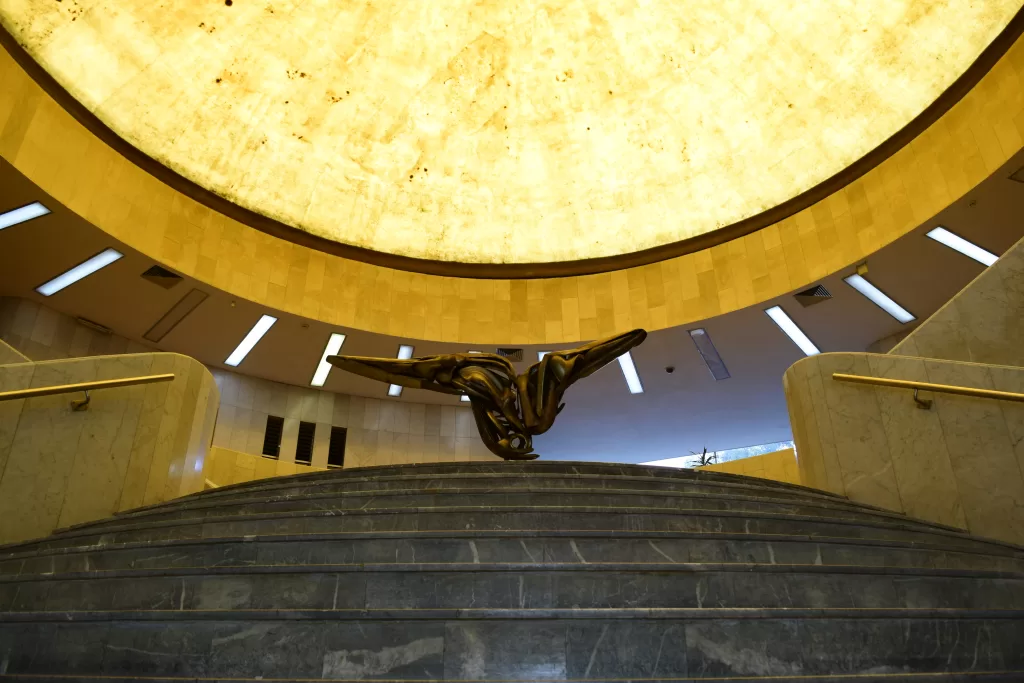
The Museum of Modern Art exhibits many 20th century and contemporary Mexican artists such as Diego Rivera, Frida Kahlo, Dr Atl, Siqueiros, Orozco, Tamayo, O’Gorman and Leonora Carrington.
Frida’s famous Las dos Fridas, or The Two Fridas, is in this museum. I love Leonora Carrington and her surrealist paintings that allude to female genitalia. While Frida and Leonor were both influential artists of their time, they didn’t really run in the same circles.
Don’t miss checking out this museum in Cdmx to check out more amazing female Mexican artists.
This building was designed by Mexican architects Pedro Ramírez Vázquez and Rafael Mijares. They wanted the organic, irregular and asymmetrical form of the building to represent the dynamic nature of modernity and for the curved exhibition halls to be able to create a dialogue between each other. For more unique architecture in Mexico City see this post.
Opening times: Tuesday- Sunday 10:15am to 5:45pm
Cost: $95 mxn
Sundays free entrance.
How to get here: You can arrive by Line 1 of metro Chapultepec, Line 7 of metro Auditorio, or Line 7 of metrobus stop Gandhi.
📍Av. Paseo de la Reforma y Gandhi s/n, Bosque de Chapultepec
More information
9. Museo Soumaya (Soumaya Museum)
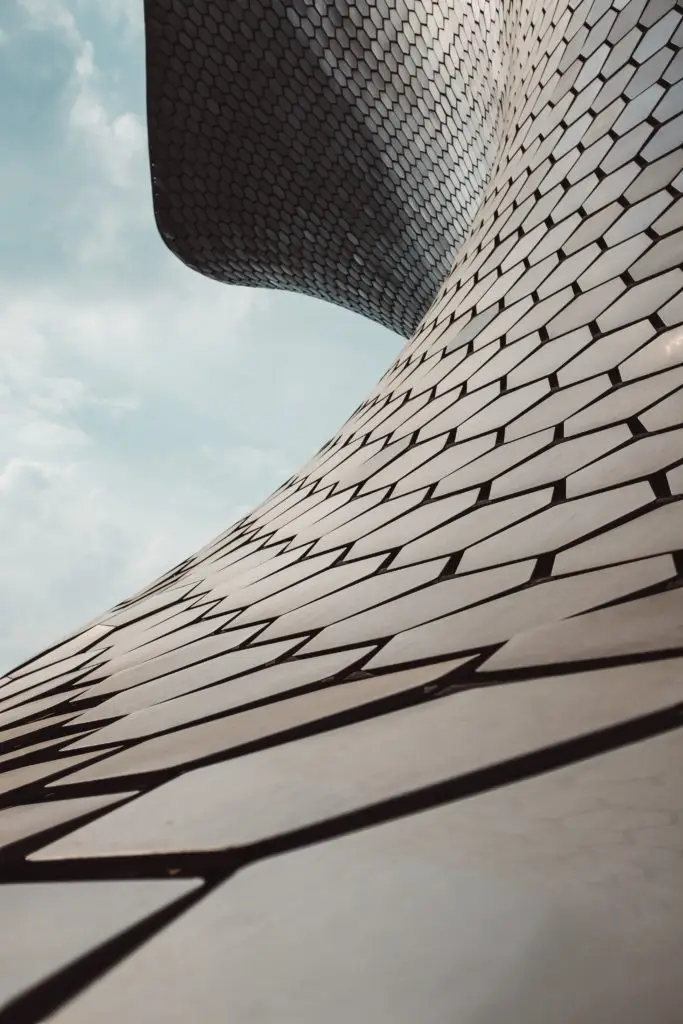
The Soumaya Museum is a six-story museum that houses the personal collection of Carlos Slim, Mexico’s billionaire. The museum is named after his late wife and was designed by architect Fernando Romero with the guidance of Frank Gehry. the outside is an impressive curved structure with 16,000 aluminum hexagon plates.
The collection is impressive—70,000 pieces— and includes the largest number of works by Auguste Rodin outside of France, including his Thinker. There are also works by Salvador Dalí, Diego Rivera, David Alfaro Siqueiros, El Greco, Calude Monet, Camille Pisarro, Edgar Degas, Vincent Van Gogh, Joan Miró, among others.
The museum is designed to go from top to bottom and is divided into thematic areas and also includes pre-columbian and colonial Mexican art as well as other anthropological pieces.I recently read it has too much filler, but I disagree. I love the museum and it is a great free thing to do in Mexico City!
Opening times: The museum is daily from 10:30am to 6:30pm.
Cost: Free entry
It is not technically Polanco but so close it is included in the Polanco section for the Mexico City guide.
📍Bulevar Cervantes Saavedra esquina Presa Falcón, Ampliación Ganada
More information
Where to Stay in Mexico City
Whether you stay in Mexico City while you visit, or take a day trip, these are my favorite hotels in Polanco, Condesa, Roma and Centro. I’ve either stayed in these hotels or eaten at their terraces enjoying the amazing views.
Presidente InterContinental Mexico City by IHG ⭐️⭐️⭐️⭐️⭐️
Polanco
great location, great restaurants inside and around, luxury, pet-friendly
Hotel Parque Mexico Boutique ⭐️⭐️⭐️⭐️
Condesa
great location, amazing terrace with restaurant/bar, great for jacaranda season
Hotel Marbella ⭐️⭐️⭐️⭐️
Roma Norte
walkable neighborhood, close to bars and nightlife
Hotel Catedral ⭐️⭐️⭐️⭐️
Centro Historico
amazing views of Cathedral from rooms and restaurant
Check out other things to do in Mexico City
Mexico City Travel Guide: Best Neighborhoods, What to Do, Where to Eat, written by a local
33 Mexican Slang Words
What To Eat In Mexico City: 7 Mexican Foods You Need To Try
Where To Shop The Best Mexican Souvenirs In Mexico City
10 Best Day Trips from Mexico City
Off The Beaten Path Mexico City: 22 Non-Touristy Things To Do
5 Fun And Unique Activities In Mexico City
Día de Muertos in Mexico City: An Amazing Celebration of Life, Death, and Tradition
Day of the Dead: 10 day Mexico City Itinerary