Día de Muertos (Day of the Dead) is one of the most significant and beautiful traditions in Mexican culture. Growing up I remember my school always preparing different activities to celebrate Día de Muertos including making our own classroom ofrenda and our own calaverita. Mexico is known for blending ancient indigenous traditions with Catholic influences in vibrant, colorful and heartfelt celebrations. From colorful ofrendas to lively street festivals, here’s your guide to celebrating Día de Muertos in Mexico City.
When is Day of the Dead in Mexico?
We celebrate Day of the Dead on a couple of days, but especially important are, November 1st and 2nd.
Many believe the spirits of the dead start coming to the world of the living since the 28 of October for those that died tragically or violently, the 30 and 31 for children who were not baptized.
November 1st celebrates the Dia de Todos los Santos. While for the Catholic church this day celebrates all the saints, in Mexico it celebrates all the children who have passed. I’ve seen that it is called Dia de los Angelitos or Dia de los Inocentes, but I’ve heard the former very little and the latter only for our equivalent of April fool’s.
November 2nd is the actual Day of the Dead, the day for all the adults.
What is Día de Muertos?
Día de Muertos is a unique celebration of our dead loved ones that has bee recognized as a UNESCO Cultural Heritage of the World.
Mexicans have a unique way of dealing with death. Day of the Dead has become oversimplified into colorful skeletons and celebrating death. But it is actually a reminder that life is precious and we should mourn and remember with joy.
Día de Muertos has pre-Hispanic origins since the Mexica celebrated their dead once harvest season was over. This tradition now incorporates the Catholic influences of the Spaniards. We believe the spirits of our dead return to their communities once a year.
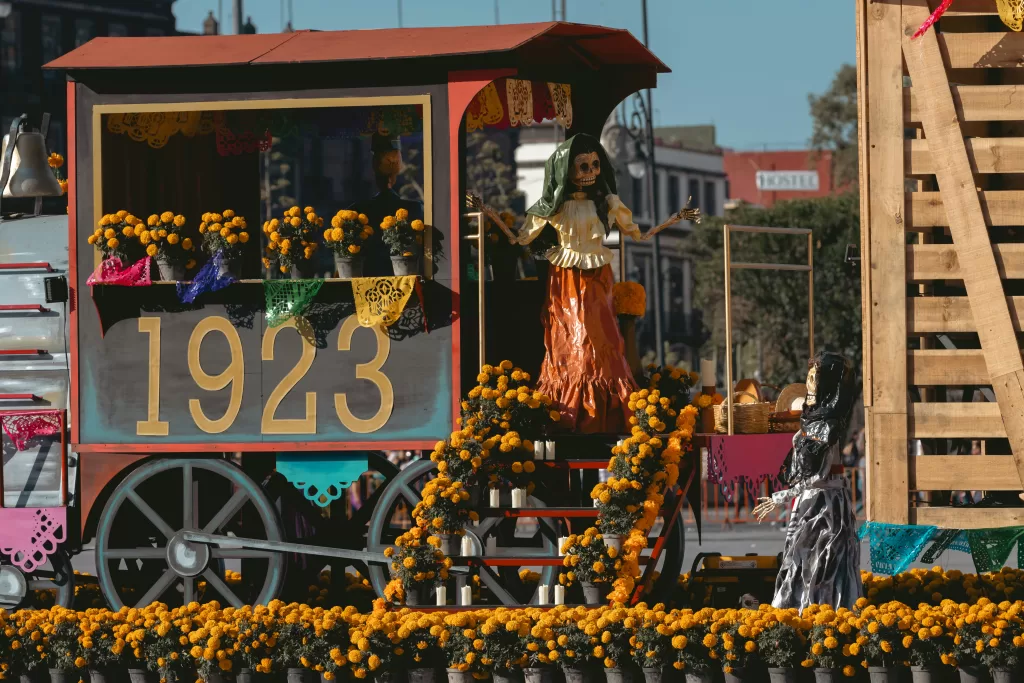
It is not a sad occasion but rather a festive time to celebrate the lives of those who have passed away. Families create ofrendas or altars to honor their loved ones, offering their favorite food and drink, and incorporating candles and marigold flowers to guide the spirits of the deceased back to the world of the living.
From the colorful altars to the festivals and celebrations, you can tell that this tradition is seeped in love and joy, not just mourning. While it is a day of respect, if you’re visiting Mexico City during this time, you’re in for a truly magical experience.
Altars (Ofrendas): The Heart of Día de Muertos
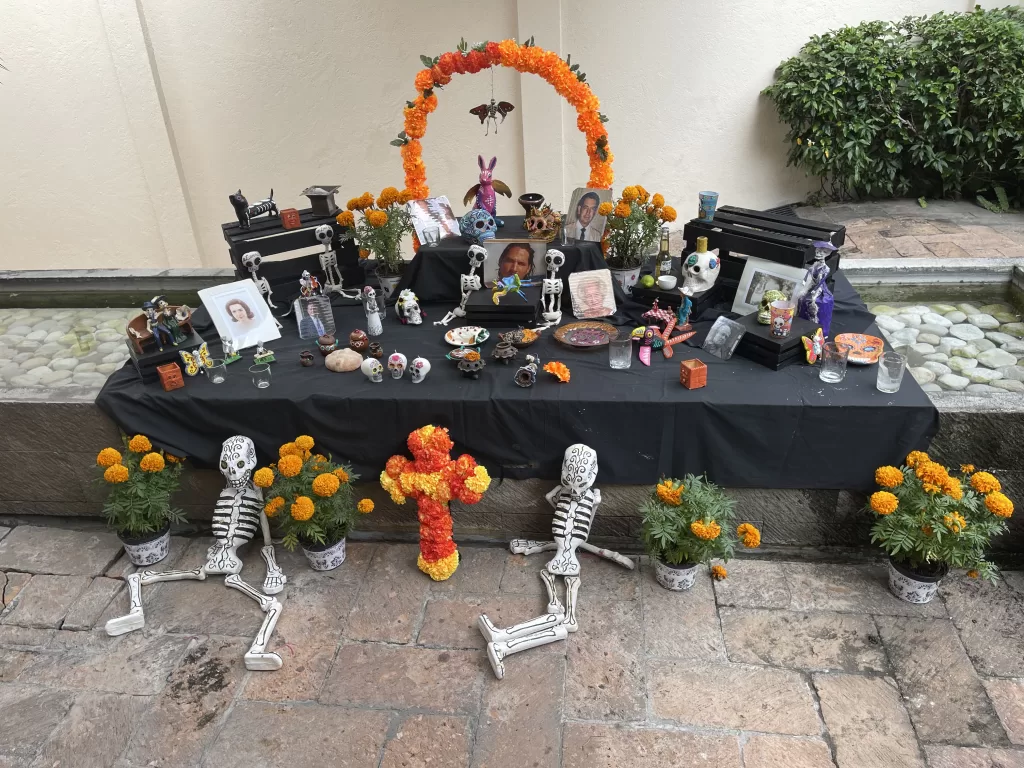
The ofrenda or altar is the most important symbol of Día de Muertos. These altars are typically set up at homes, public spaces, businesses, and cemeteries, decorated with offerings that invite the souls of the deceased to return for the celebration.
We start in mid-October setting up the altar, remembering our dead loved ones with joy, what they liked to do and drink during their lives. The food set out for our loved ones is thrown out because we believe that the when the dead come, they “eat” the soul of the food and it becomes tasteless.
I’ve never tried any of the food after November 2nd to confirm, but it’s nice to believe your dead ancestors can come and celebrate for one day a year with you.
What does an Ofrenda for Day of the Dead include?
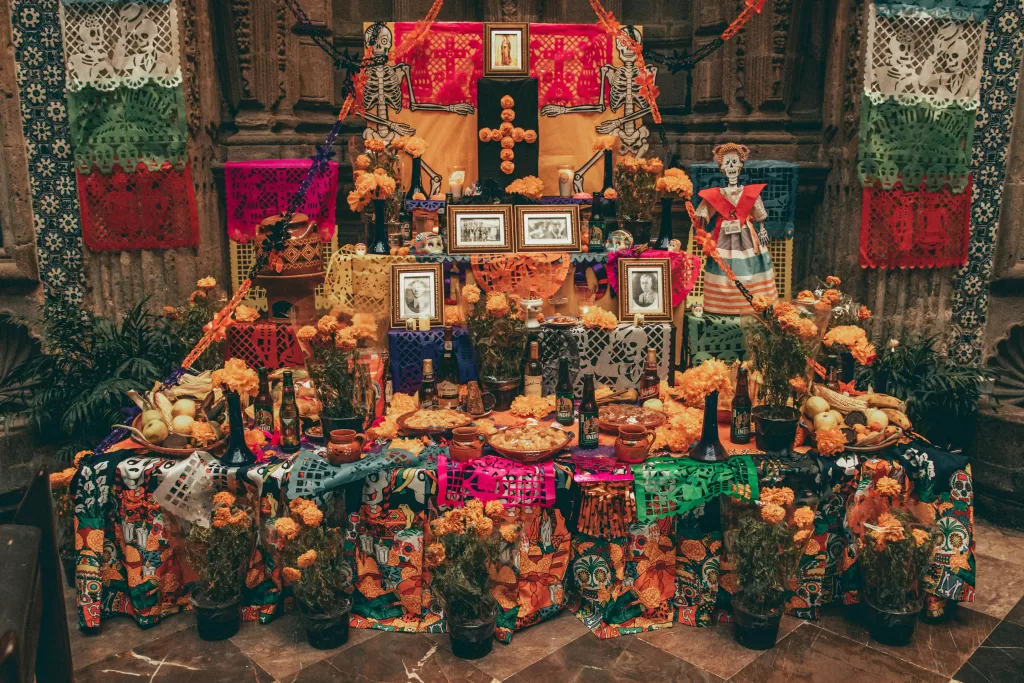
- Photos of the deceased: These portraits are placed to invite the souls back. You can go as far back as you want. But if you’ve seen “Coco” you better include everyone!
- Candles: Because of the Catholic influence we sometimes use religious candles called cirios. These candles are the light that guides and gives hope and peace to our spirits.
- Water: It calms our loved ones’ thirst.
- Salt: So the spirit of our loved ones who are visiting do not get lost or get corrupted during their visit to the world of the living.
- Incense (Copal): A fragrant resin that is burned to purify the space.
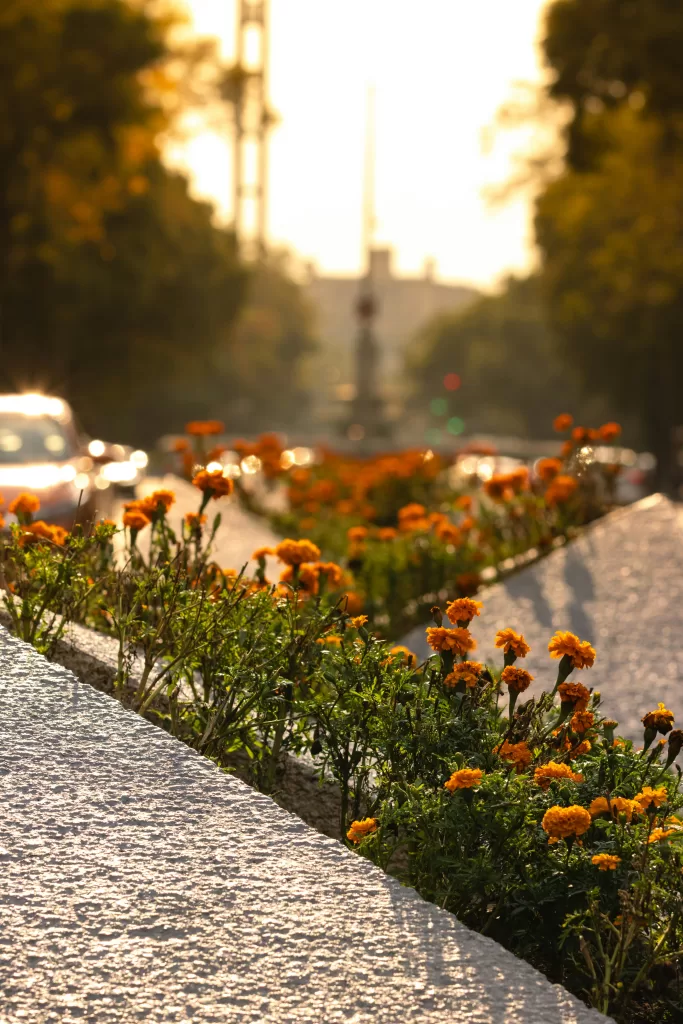
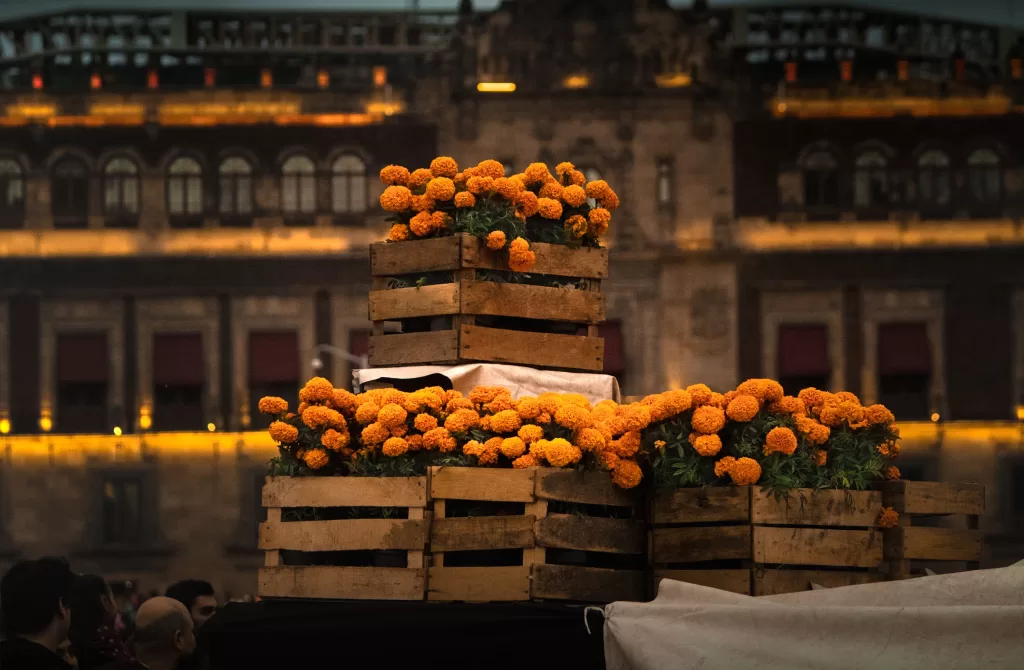
- Marigold flowers (Cempasúchil): Their bright orange color and strong scent are believed to guide the spirits back to the living world.
- Pan de Muerto (Bread of the Dead): A traditional sweet bread that represents the cycle of life and death. It is one of my favorite things to eat during the season.
- Fruta: Other than the favorite food of our dead, there are some traditional fruits that are added such as mandarine, cane sugar, guava, orange and jicama. Some of these were also included in traditional piñatas for Christmas posadas.
- Calaveritas: Traditionally, they used to use real skulls, but they were substituted for skulls made of sugar, chocolate and amaranth. Of course these were a favorite of all kids growing up, we would steal one or two before November 1.
- Papel Picado: This tradition and colorful cut paper adorns our altars. It not only gives it that pop of color, but it also represents air. All the elements need to be present in the ofrenda.
- Food and Drinks: We add their favorite food and drink, maybe a caballito (shot) of tequila, some champurrado with tamales, or some frijoles.
- Personal Items: Objects that belonged to the deceased, such as clothing or keepsakes, are placed to welcome their spirit.
Where to See the Best Altars for Day of the Dead in Mexico City?
- Zócalo: The grand public altar in the Zócalo is a must-see. It is definitely the best altar for Day of the Dead in Mexico. From October 25 to November 2nd.
- National Museum of Anthropology: The museum often sets up large and detailed ofrendas, honoring significant figures from Mexico’s history.
- Palacio de Bellas Artes: The museum has incredible altars for Day of the Dead. Last year, the ofrenda made by the School of Crafts of the Palace of Fine Arts (INBAL) included a skeletal orchestra.
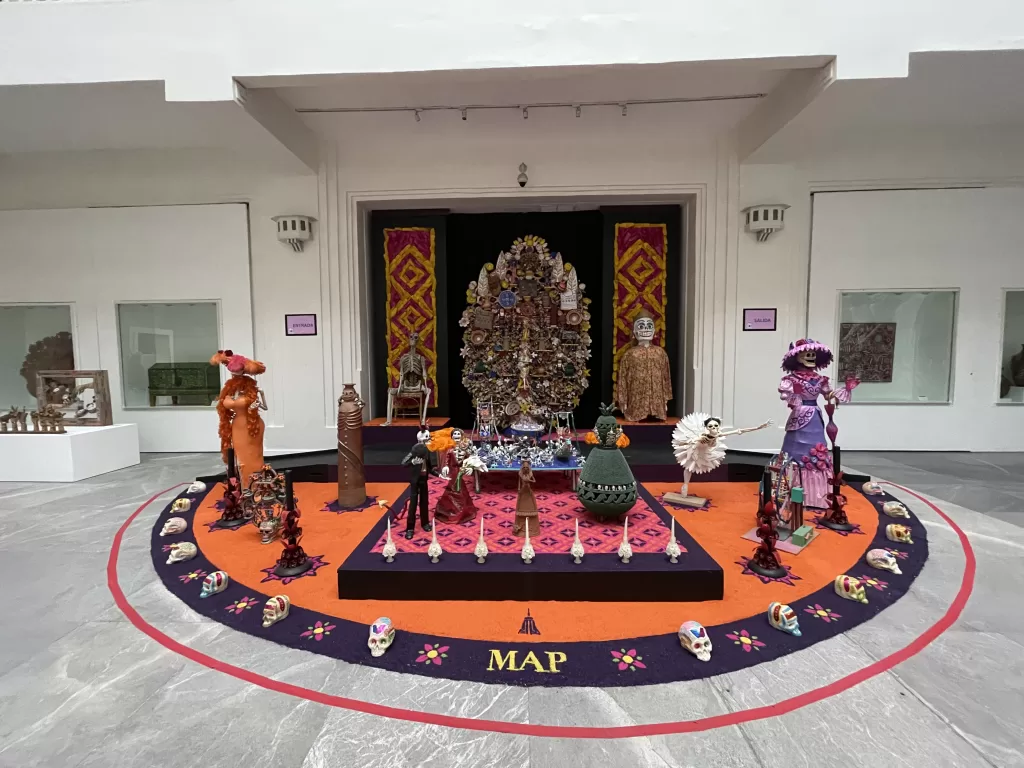
- Museo de Arte Popular (MAP): these two museums in Historic Downtown also set up altars for Day of the Dead. The MAP has special exhibitions during this time, as well.
- UNAM: this off-the beaten path site for seeing amazing Mexican murals is also home of a mega ofrenda. They also host events including music, competitions for calaveritas, illustrations, and short videos.
Día de Muertos Traditions: What to Expect
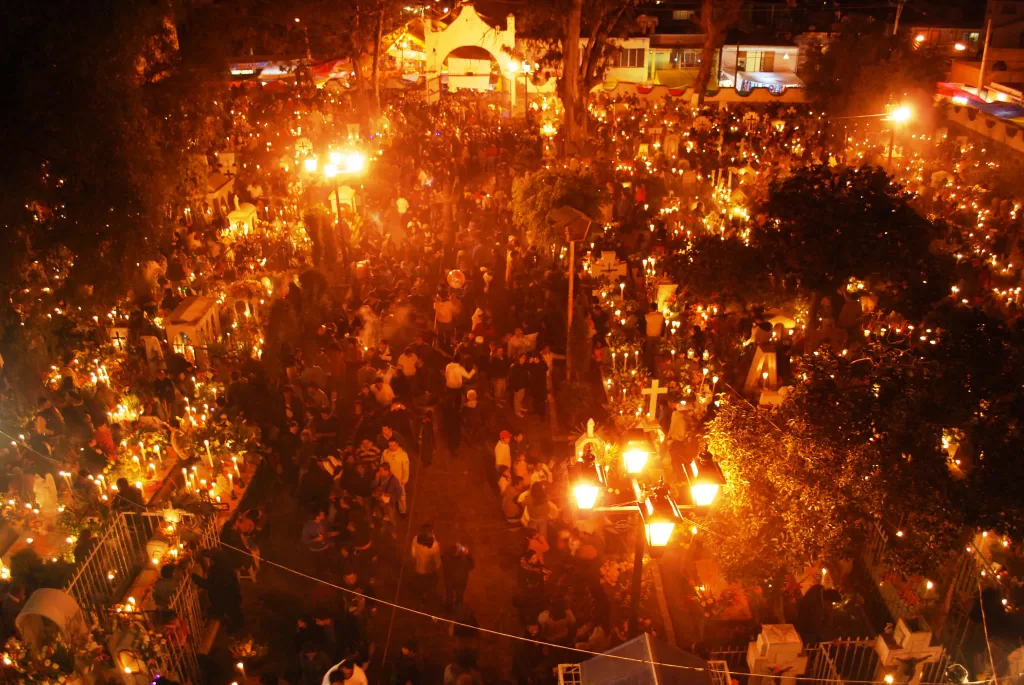
Cemeteries
Traditionally, it is a family-oriented celebration. Many Mexicans go to the cemeteries to clean the graves, decorate them with flowers and candles, and spend a day or evening with them with food, drinks and storytelling. The cemetery in Mixquic is famous for their Day of the Dead celebration.
Of course live music is present, even at cemeteries. Mexicans celebrate death with style and it’s something I’ve always loved and admired of my people. We laugh at death and joke about it, and it’s therapeutic.
Parades and street celebrations
Larger scale festivities are now more common including cemetery processions and parades. Mexico City now has an amazing Day of the Dead parade with colorful skeletons, and people in traditional dress and performing dances. There is also an alebrije parade and exhibition.
While the skeleton wasn’t widely used before, today, skeleton imagery is very common. You’ve probably seen colorful skulls and skeletons signaling the start of the season. This skeleton imagery is nothing like halloween. It is not spooky but colorful bringing to life La Catrina —a satirical cartoon of a dead rich woman that embodied how death spares no one, not even the rich.
Costumes and face paint
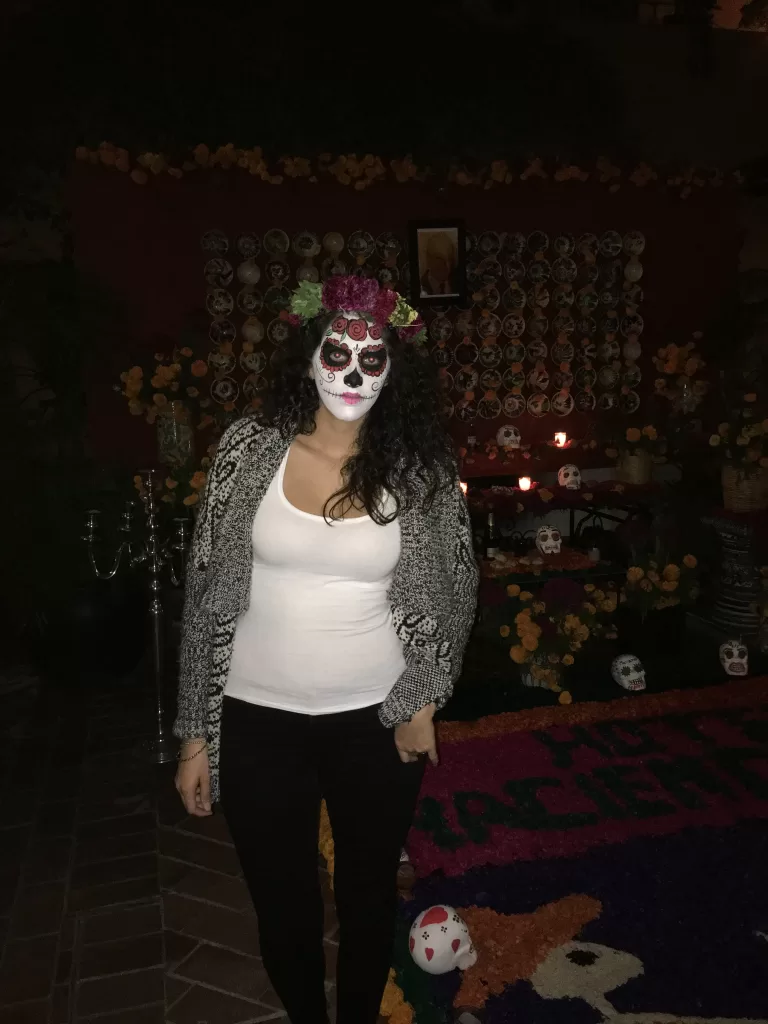
People will dress up as Catrinas or Catrines, the male counterpart, in elegant clothes and face painting. If you don’t know how to do a proper skull, don’t worry, there are face painters on the street that will gladly turn you into a Catrina.
Seasonal Food
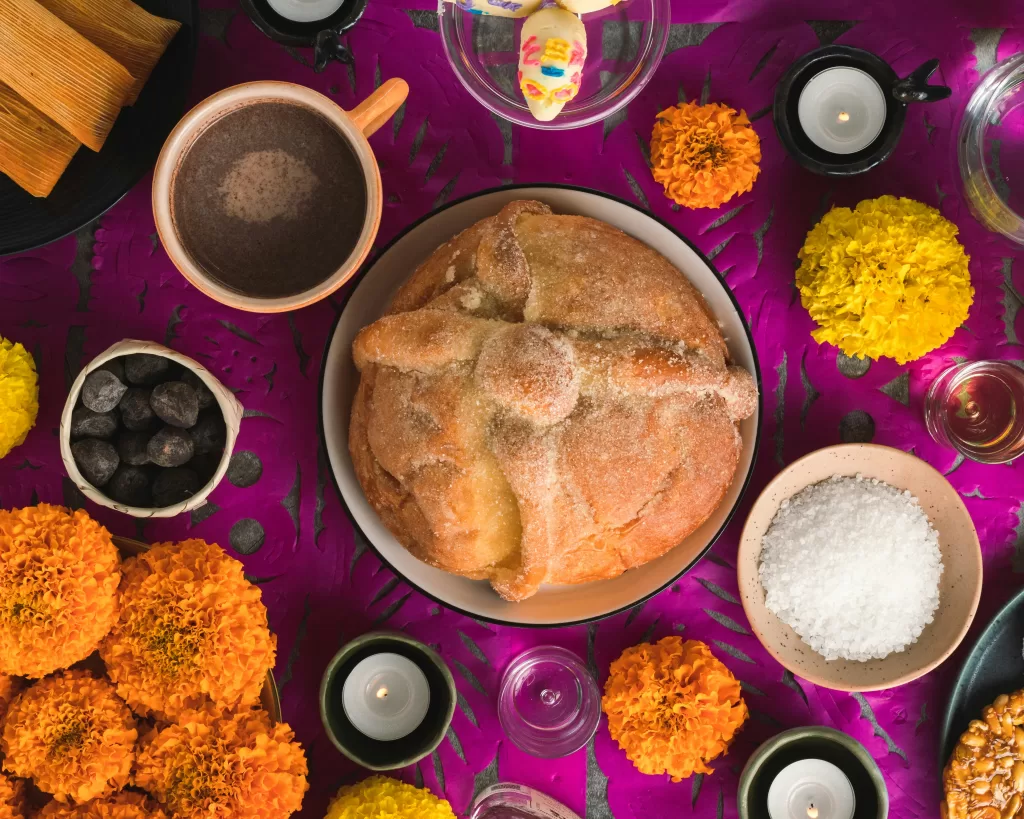
You’ll find plenty of delicious Mexican food, including pan de muerto, tamales, mole, cane sugar sticks, and atole, as well as the iconic sugar skulls.
Do not leave without trying pan de muerto! It is one of my favorite things during the season and I sometimes beg my mom to make it another time of the year! It is delicious sweet bread and some more modern bakeries make it filled with things like jam or chocolate. Try it plain or with some nata and don’t forget the atole or champurrado to accompany it. Atole is a rice based drink while champurrado is an atole with chocolate.
Calaveritas
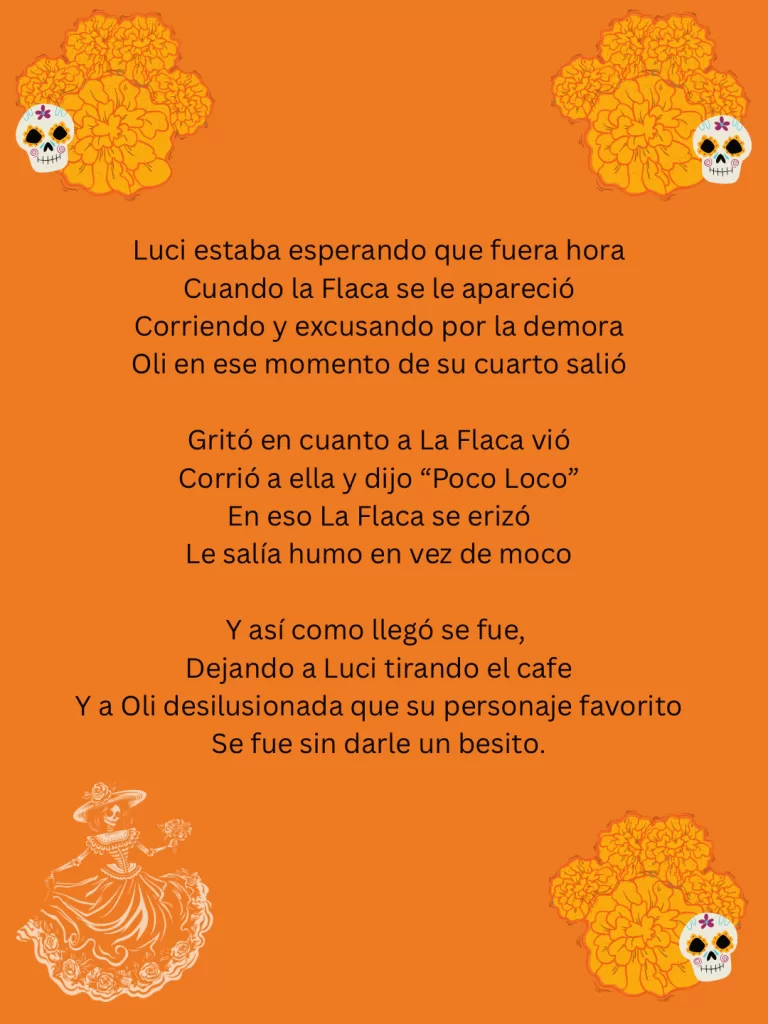
This was one of my favorite things to do growing up, and it does not refer to the little sugar skulls but to a poem. These are playful and satirical poems written for Día de Muertos. They tease death and poke fun at friends, family, or public figures.
The tradition began during the colonial era as social commentary critiquing public figures, politicians and social issues. Today, they are irreverent and sometimes humorously talk about La Catrina, Death, coming even for a loved one.
Calaveritas really shed a light on our unique approach to death in, viewing it with familiarity and humor, and even welcoming it with open arms. My husband couldn’t believe it when I first told him, but to me, the way we view death is normal and precious. Death is a continuation not an end.
Day of the Dead Shopping
There will be many thematic handicrafts that you can take home as a souvenir. Many cultures do not share our love of skulls and death depictions but if you do, the handcrafted art during Day of the Dead will be an amazing addition. Remember to not buy chafa, or cheaply made junk, but buy true art made by artisans such as a depiction of La Catrina, some papel picado, or a beautiful painted skull so you can start building your own ofrenda.
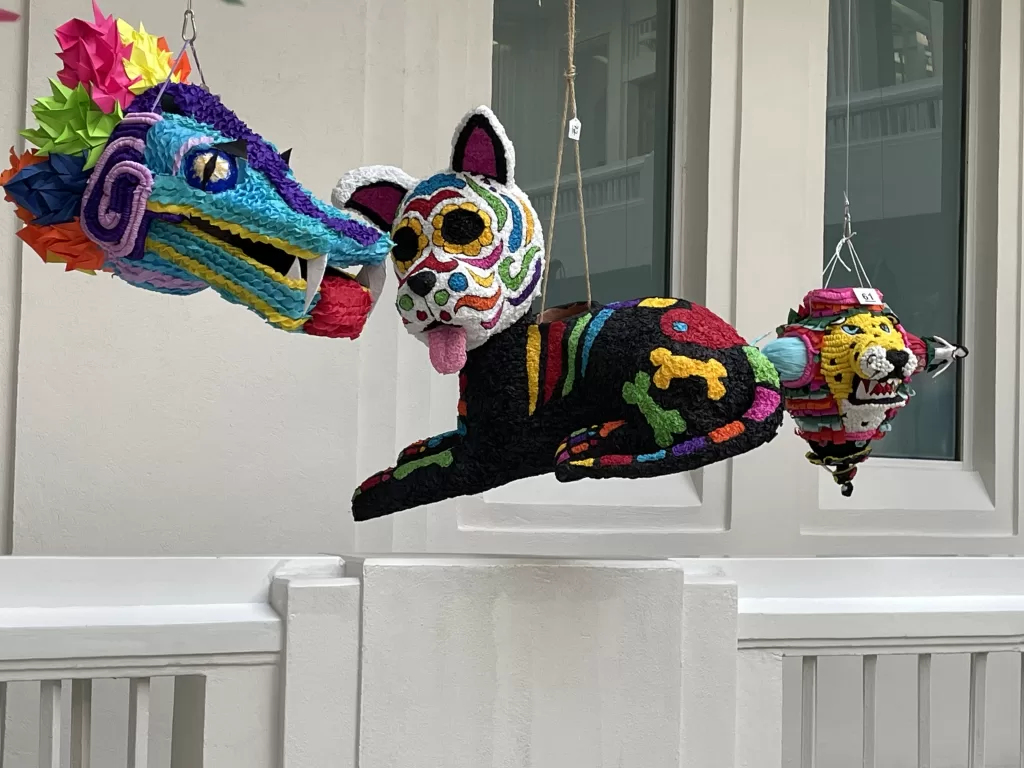
Where to Celebrate Día de Muertos in Mexico City
Mexico City hosts some of the most extravagant and heartfelt Día de Muertos celebrations. If you want to see all the celebrations, I recommend getting there on or before October 25 to be able to experience this deeply cultural and vibrant holiday.
See my Day of the Dead 10 day Mexico City itinerary to plan your visit and include all the must see museums and sites in Mexico City, while making it a special Day of the Dead centered trip to Mexico.
Day of the Dead Tours in Mexico City
Take a Pre-Hispanic Day of the Dead Tour where you’ll get to learn the myths and legends that have influenced Mexican culture for generations.
Do a Dinner for Noche de Muertos at Xochimilco where you will go on a boat ride on a trajinera, enjoy some delicious Mexican food, and great drinks. Dress up in costume for this!
Do a guided tour of Mixquic for Day of the Dead with a visit to the cemetery and experience the customs and traditions.
Full Day of the Dead Tour in Mexico City with a tour of downtown, cemetery visit, and a night tour on a trajinera in Xochimilco.
Mega Ofrenda (Colossal Altar)
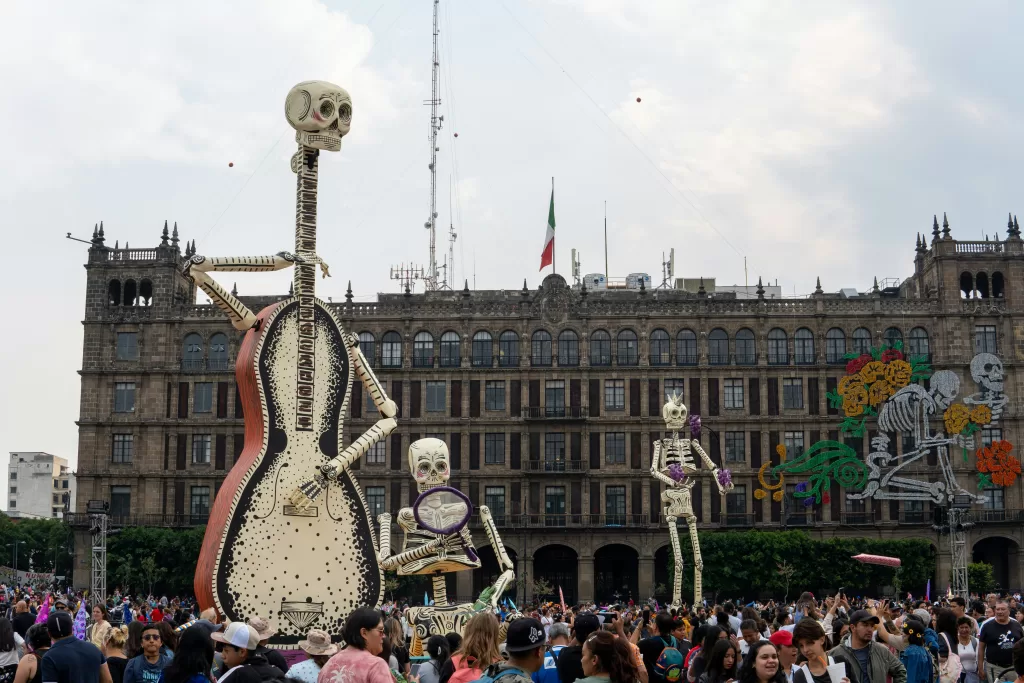
What to See: The elaborate and collosal mega ofrenda. A public installation and Day of the Dead altar in collaboration with Mexican artists, designers, architects, and creatives build the mega ofrenda, For 2025 the theme for the ofrenda is Tenochtitlan with Xoloitzcuintle figures!
📍 Where: The Zócalo, Mexico City’s historic main square, is the heart of the Día de Muertos festivities. Every year, the square is transformed into a massive celebration ground full of color, aromas, music, and traditions that will take you back in time.
🗓️ When: This Day of the Dead altar will open from October 25 to November 2nd.
Procesión de Catrinas (Catrinas Parade)
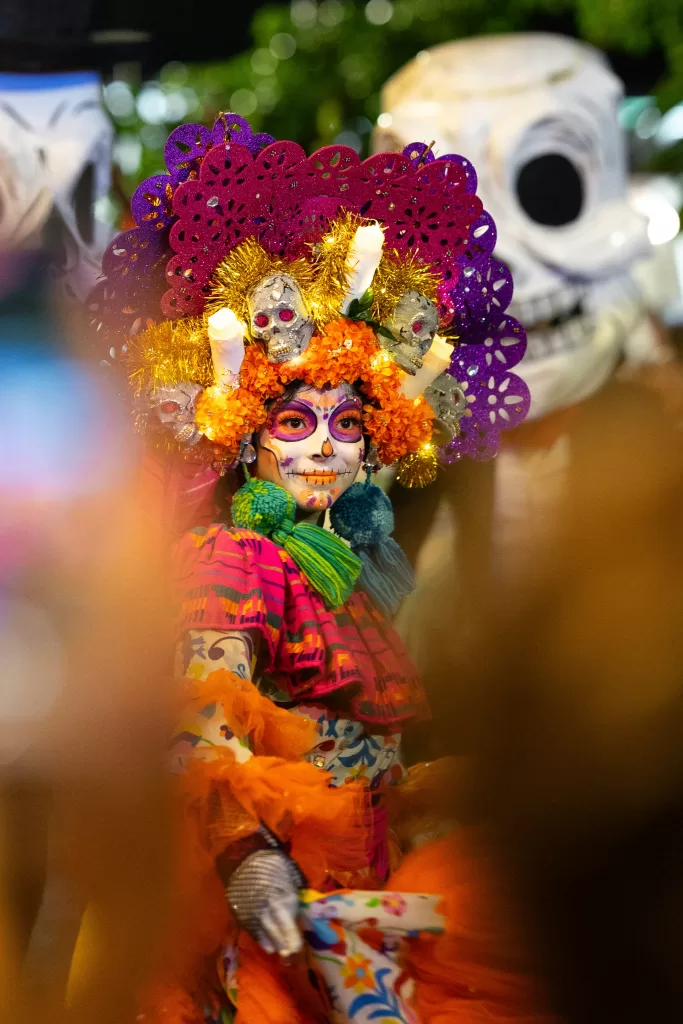
What to See: This is the Day of the Dead Parade in Mexico City with hundreds of Catrinas, the iconic skeleton figure, walking and dancing in thematic groups. The parade is filled with giant skeleton puppets, dancers in traditional costumes, and floats that depict iconic figures from Mexican folklore.
📍 Where: Along Paseo de la Reforma starting from the Ángel de la Independencia and finishing at the Zócalo.
🗓️ When: The parade will take place on Sunday October 26, 2025.
Monumental Alebrije Expo
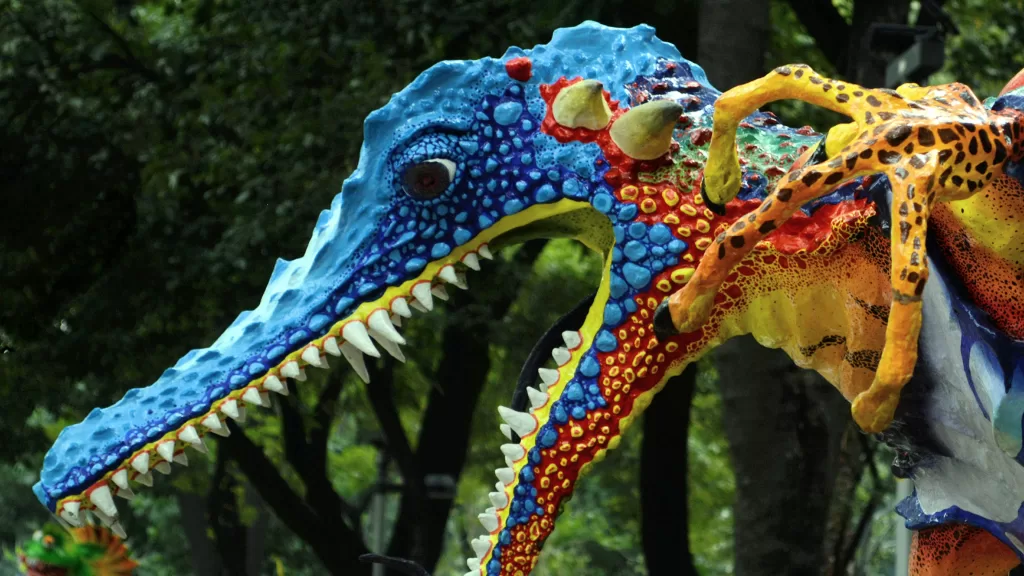
What to See: Monumental brightly colored alebrijes! But what are alebrijes?Alebrijes are folk art sculptures of fantastical or familiar creatures. They are traditionally made of papier-mâché or wood and always colorful. They are not an old tradition, but rather a new one started around the 1940s that incorporates old techniques. “Coco” falsely called them “spirit guides for the afterlife” thus cementing their status as crucial to Dia de Muertos. While that is not true their colorful and fantastical features have made them incredibly popular during this time and as a Mexican folk art. My sister had them as center pieces for her wedding.
📍Where: On Paseo de la Reforma. The parade will go from the Zócalo to Reforma, and after the alebrijes will be exhibited between the Ángel de la Independencia and Estela de Luz (right at the start of Chapultepec Park).
🗓️ When: The parade will take place Saturday October 18, 2025 at 12:00.
After the parade, the alebrijes will be exhibited along Paseo de la Reforma from 20:00 on October 18th to November 9th.
Xochimilco
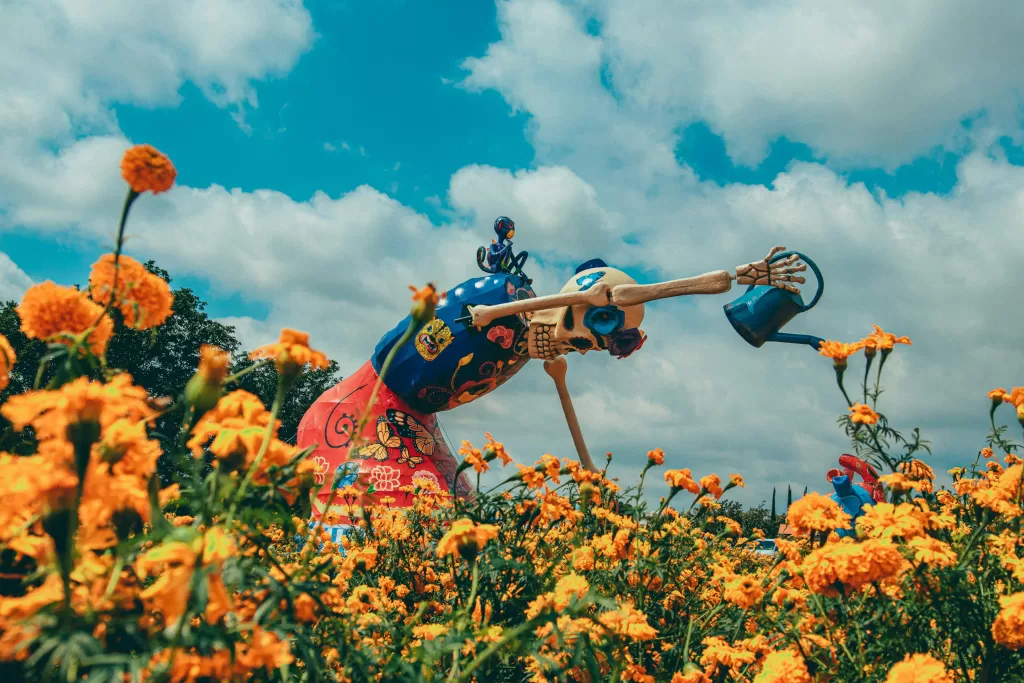
What to see: Xochimilco is famous for its floating gardens, chinampas, and colorful boats, trajineras, which are a fun and unique activity. But Xochimilco becomes even more lively and festive during Día de Muertos. The trajineras are decorated with flowers, candles, and images of the deceased, creating a beautiful procession through the canals. There are shows, boat tours while listening to legends, and Day of the Dead boat ride and dinner.
📍 Where: See the huge Catrinas in the cempasúchil (marigold) fields in Paraje San Sebastian in San Luis Tlaxialtemalco. A lot of the cempasúchil used during this time is cultivated in Xochimilco!
Do a Legends Tour on a trajinera and cruise the Xochimilco canals while you listen to Mexican legends and visit the creepy Isla de las Muñecas, or Doll Island. Embarcadero de Caltongo en Av. Nuevo León 113, Caltongo, Xochimilco
🗓️ When: Shows vary but generally last weekend of October, and October 30 through November 2.
San Andres Mixquic
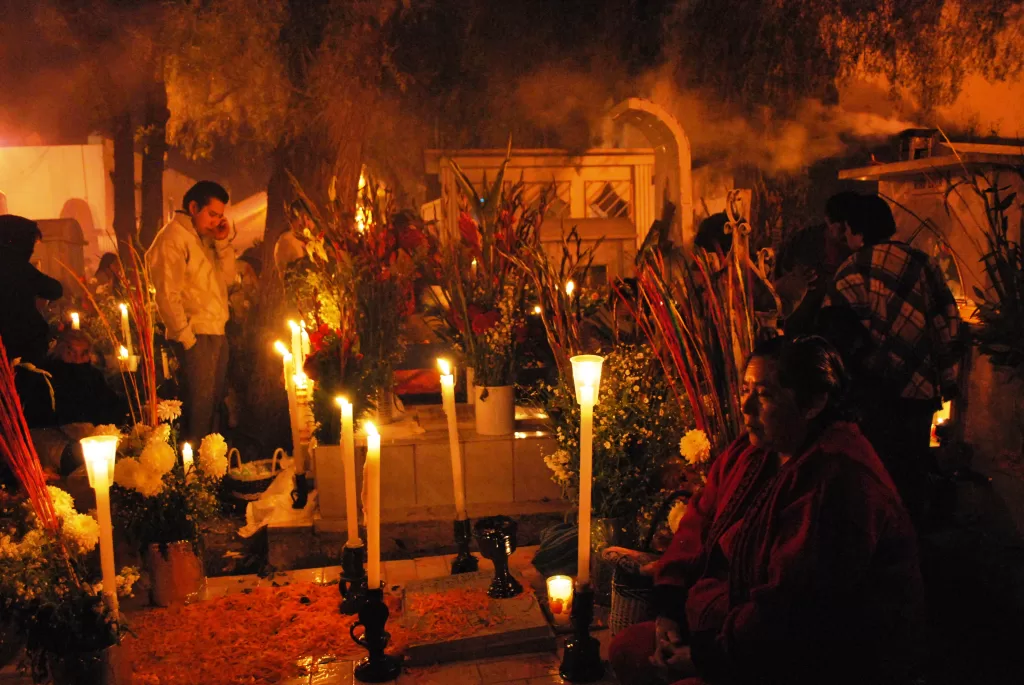
What to see: You don’t have to even do a day trip to have an incredible traditional experience for Day of the Dead. In Mixquic, the streets are decorated with cempasúchil, papel picado, candles, incense and incredible Day of the Dead murals. You will see the intricately adorned graves in the cemetery.
Do a Day of the Dead tour in Mexico City to this amazing pueblo, or borough in southeast Mexico City.
📍 Where: San Andres Mixquic Cemetery
🗓️ When: The Alumbrada takes place the night of Novembver 2nd when the families light up candles and set pathways with cempasúchil to say goodbye to their loved ones’ spirits and guide them back to the land of the dead. The whole town, except the cemetery, goes dark and it is truly an amazing experience.
For an itinerary see this post.
Día de Muertos is a truly magical time to visit Mexico City, as the city comes alive with colorful parades, lively music, and beautifully intricate ofrendas. It is definitely one of my most favorite holidays that blends tradition with mysticism. I hope you enjoy it as much as I do!
Check out other things to do in Mexico City
Mexico City Travel Guide: Best Neighborhoods, What to Do, Where to Eat, written by a local
33 Mexican Slang Words
What To Eat In Mexico City: 7 Mexican Foods You Need To Try
Where To Shop The Best Mexican Souvenirs In Mexico City
10 Best Day Trips from Mexico City
Off The Beaten Path Mexico City: 22 Non-Touristy Things To Do
5 Fun And Unique Activities In Mexico City
Day of the Dead: 10 day Mexico City Itinerary